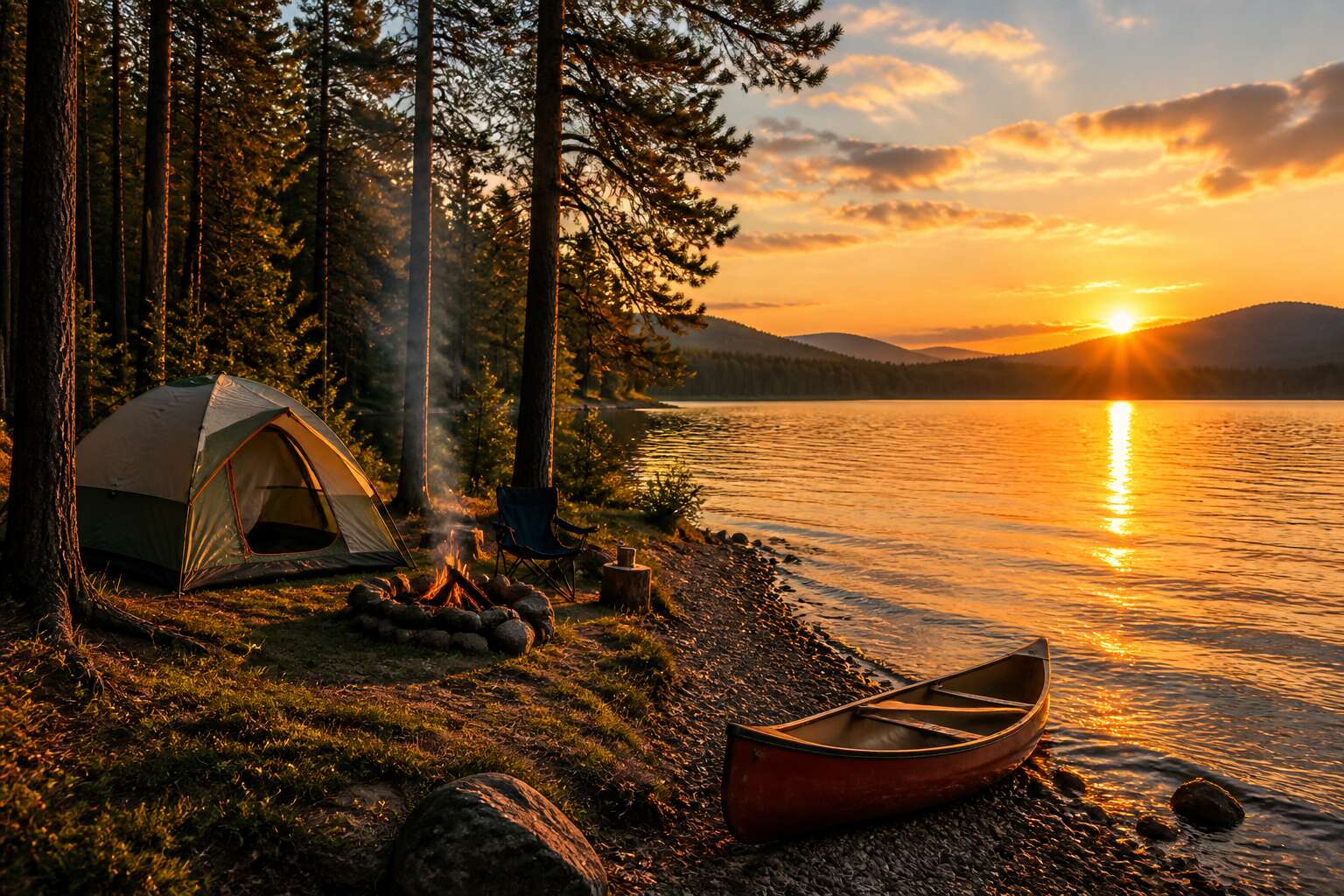
Why Waterfront Camping Makes the Perfect Getaway
Immersive Nature Views Right from Your Tent
The first morning by a lake is never silent. It is a slow unfolding of sounds, the plash of a fish rising, the murmur of reeds, the distant call of a hadeda. In moments like these, the ordinary world dissolves, replaced by a rhythm tied to the water itself.
There is a distinct privilege in being able to step from your tent onto the damp, cool shoreline before your coffee has even brewed. You get the stillness of the water, the reflection of the sky, all before the day’s noise begins.
– The light on the water changes constantly, from silver dawn to copper dusk
– Wildlife comes to the edge for a drink, oblivious to your presence
– A morning swim requires no planning, just a few steps from your canvas door
It is this absorption into the environment that sets campgrounds with lakes apart from any other site. The water provides a focal point, a reference for the day, and a constant source of sensory wonder that a simple field or forest patch cannot replicate. The experience is not passive; you become part of the ecosystem, a quiet observer.
The air feels different here, denser and charged with the scent of wet earth and aquatic plants. Your perspective adjusts. You measure time by the movement of water and the angle of the sun, rather than the notifications on your phone. This is the true value of securing a spot at the water’s edge, where nature acts as a host and you are the humble guest.
Sunrise and Sunset Spectacles Over the Water
Some of the finest natural displays on earth require no ticket, only a shoreline orientation. At campgrounds with lakes, the horizon duplicates itself in the water, holding every hue for a few extra seconds. This is why waterfront camping makes the perfect getaway for those who measure a day by its edges.
The sunrise arrives as a slow bleed of orange and rose, then the lake becomes a sheet of shifting grey and gold. By dusk, the sequence reverses, and the western sky dominates both above and below.
- The water deepens each colour as it reflects
- The mirror surface stretches the twilight longer
- The wildlife falls silent as the light changes
These moments are not incidental. They are the reason many campers choose their site carefully. A shore facing east gives you dawn; facing west gives you dusk. At campgrounds with lakes, you can have both depending on where you pitch.
The Calming Ambience of Gentle Lake Waves
The constant lap of water on shore creates a calming rhythm that few other sounds match. At campgrounds with lakes, this ambience does more than mask noise; it encourages a slower pulse. The waves arrive with irregular pauses, each one gentle enough to lull the mind without demanding attention.
The shoreline ambience brings simple pleasures:
- Cool, damp air carrying mineral scents
- Subtle shifts in water temperature
- Muted night sounds from frogs and birds
This acoustic environment gives campers a reason to stay awake and listen, then an easier path to sleep. The lake does not force calm; it provides the conditions for calm to arrive naturally.
Ample Opportunities for Wildlife Watching
Lakefront campsites double as front-row seats to a daily wildlife parade. Water draws creatures that stay hidden inland. At campgrounds with lakes, the shoreline becomes a natural stage.
- African fish eagles scanning for breakfast
- Mongooses rustling through shoreline scrub
- Terrapins basking on sun-warmed logs
The quiet hours reward the observant. A ripple might signal a monitor lizard slipping underwater. Early mist often reveals a heron standing motionless, waiting for its own meal to swim by. The best part? You never know what will show up. One morning you get a kingfisher’s aerial dive. The next, a pod of hippos grunting across the bay. Wildlife watching here is not passive; it’s a daily negotiation between your coffee and the show outside your tent. Bring binoculars, but also just watch the edges. That’s where the action happens.
Selecting the Ideal Lakeside Site for Your Trip
Different Types of Waterfront Campsites
Nearly 70% of South African regular campers book lakeside stands a year ahead. Wind direction matters more than the view, so check topographical maps before selecting. Low-lying areas near the water often stay damp until midday.
Different campgrounds with lakes present trade-offs. Sandy beaches are popular and social. Rocky shorelines offer seclusion but require rock pegs. Elevated banks give better drainage and panoramic sightlines, yet demand longer walks to the water. Each type changes your daily rhythm.
- Sandy beach: easy access, busy.
- Rocky point: private, challenging setup.
- Grassy bank: soft ground, moderate privacy.
Settling on the right site transforms your stay, making every morning effortless.
Key Amenities to Look For
At popular campgrounds with lakes, power and water hookups are the first sites to vanish, often booked out six months in advance by regulars who know the grid. The real challenge isn’t finding a spot, it’s finding one where the infrastructure won’t fail you.
I’ve learned to look past the immediate shoreline appeal. A lakefront stand with no nearby tap means hauling water uphill every morning. That becomes your entire holiday rhythm. Check the distance to ablution blocks, and whether they’re serviced daily during peak season. Some smaller reserves only clean facilities twice a week.
The most reliable campgrounds with lakes offer a concrete hierarchy of amenities:
1. Dedicated power points with surge protection
2. Potable water stands within 50 metres
3. A refuse collection point that doesn’t attract baboons
4. Braai areas with windbreaks, not just open fire pits
Ask about water quality before you swim. Many South African dams host bilharzia, and stagnant edges breed mosquitoes after dusk. A decent camp manager will tell you which zones are safe. The serene scenery matters less when you’re battling a faulty geyser or queuing for a shower at 6am. Choose the site that functions, not the one that photographs well.
Shade, Privacy, and Wind Protection Considerations
The most picturesque clearing at dawn can become an unbearable furnace by midday. I have watched seasoned campers arrive, claim the first open patch of grass beside the water, and then spend the entire afternoon shifting their gazebo to chase the moving sun. Shade is not a luxury at campgrounds with lakes; it is a survival requirement. The highveld sun is unforgiving, and the reflection off the water doubles the intensity. Look for sites backed by mature acacia or eucalyptus trees that cast a permanent shadow during the hottest hours. A northern exposure offers morning light but avoids the brutal afternoon glare, which is a preferable trade for most.
Privacy is often a myth in open fields, but clever layout can create the illusion of solitude. You want a site where the next tent is not within earshot of your morning coffee. The best campgrounds with lakes utilise natural undulation, thickets of bush, or dense reeds to separate neighbours. Observe how the rows are staggered. If you can see the entire length of the shoreline from your chair, you will likely be sharing that view with dozens of others. Seek out the corners of the reserve, the sites that back onto the treeline rather than the central common area.
Wind is the silent killer of a relaxed weekend. The water surface acts as a runway for gusts that pick up speed and bite hard across the bank.
– Examine the prevailing wind direction before you arrive. A site sheltered by a ridge or a dense stand of trees on the western side will block the infamous afternoon southeaster.
– Avoid open promontories or points that jut into the water. These offer magnificent views but zero protection when the weather turns.
– Check for natural windbreaks, such as tall grass or a line of rocks, that might deflect the breeze rather than channel it straight into your awning.
Even the most serene lake can produce a relentless breeze that turns a relaxed afternoon into a battle with flapping canvas. The true art of selecting a spot at campgrounds with lakes lies in sacrificing a perfect panorama for a sheltered pocket of stillness. You will sleep better, cook easier, and enjoy the water far more when you are not constantly chasing your hat. The site that offers dappled shade, a natural screen of vegetation, and a leeward position is worth more than any unbroken view of the horizon.
Proximity to Boat Ramps and Fishing Spots
Proximity to the launch point can shape the entire weekend at campgrounds with lakes. A site that appears tucked away on a map may still require a sweaty twenty-minute shuttle with a boat on its trailer. I have learned to measure success in how many trips it takes to move gear down to the water. Study the aerial photos that many campgrounds with lakes now post online, and confirm the route before you book.
The fishing spots follow their own rules. The bank where the water deepens slowly holds bream in the early hours. The rocky shelf that juts into the shallows attracts yellowfish. Read the water for clues:
- Darker water signals a sudden drop-off.
- Reeds breaking the surface suggest structure below.
- A cleared bank often marks a popular launching point.
Position yourself between these features, and the ramp becomes a convenience rather than a recurring frustration.
Family-Friendly vs. Adults-Only Settings
Campgrounds with lakes present a curious social equation that many weekend adventurers overlook. You are not merely selecting a patch of grass near water. You are choosing your neighbours for the next three days, and that decision carries more weight than the quality of your tent pegs.
Family oriented sites tend to hum with a particular rhythm. The morning begins with the clatter of camp stoves and the cheerful negotiations over who gets the last boerie roll. By midday, the swimming area becomes a flotilla of floating noodles and inflatable unicorns. There is a certain charm to this chaos, especially when your own children are part of the fray. Yet the quiet hours are precious. I have found that families retreat earlier, and the lakeshore transforms into a glassy mirror reflecting the stars. Adults only establishments, by contrast, offer a different currency. The quiet is immediate and enveloping. The neighbouring tent holds an angler who respects the dawn hours, not a toddler who greets them with gusto. Conversations drift between bird calls and the best fly patterns for yellowfish. If your goal is to write a novel, meditate, or simply remember what your own thoughts sound like, these campgrounds with lakes provide that sanctuary. The tradeoff is often a stricter set of rules regarding noise and generators.
The social choreography differs as well. In family settings, you are likely to be invited to share a braai fire and gossip. In adult only spaces, a nod of acknowledgment usually suffices as a greeting. Both have their place in a well travelled life. Consider what you seek from the water. Do you desire the sound of laughter echoing across the reeds, or the singular call of a fish eagle at dusk? The best campgrounds with lakes cater to each preference with equal dedication. One offers the noise of living memory. The other provides the silence to make new ones.
Pet-Friendly Options and Restrictions
Many travellers assume a swimming spot for the dog comes standard with any waterfront pitch. That assumption can sink a holiday. Only a fraction of campgrounds with lakes permit dogs near the water, and those that do often enforce seasonal limits or designated pet zones.
Before booking, check the fine print on leashes, vaccinations, and noise. Some sites demand a tether at all times. Others ban large breeds entirely. The most reliable method is a phone call, not a website scan.
Common restrictions I have encountered:
- No pets on the beach between 9am and 5pm.
- Proof of tick treatment required at check-in.
- A maximum pet weight of 15kg.
The best campgrounds with lakes for pet owners separate the braai area from the water’s edge, granting both comfort and safety.
Popular Water and Land Activities to Enjoy
Swimming, Floating, and Cliff Jumping Spots
Some of the finest campgrounds with lakes are defined by what you do between swims. Swimming zones near the shore give you a way to cool down after a long hike, while floating in an inner tube lets you rest without effort. Cliff jumping spots are often found at the deeper, rockier edges of the lake, where the water drops off quickly. These spots require a quick check of the depth and a clear landing area, but the reward is an immediate rush.
On land, the pace shifts. Wooded trails loop around the water, leading to quiet coves and open banks. Common land activities include:
- Hiking along ridgelines with lake views
- Setting up a picnic near a shaded bank
- Playing frisbee or lawn games on open grass
Some campgrounds with lakes have disc golf courses or volleyball nets, which add a social layer to the day. If you prefer solitude, a simple walk along the shoreline can be enough.
Kayaking, Canoeing, and Paddleboarding Adventures
Paddling turns the lake into a private trail, one that shifts with every stroke of your blade. Kayaking suits solo travellers who prefer their own rhythm, while a canoe invites a partner to share the work and the quiet. Stand-up paddleboarding adds a balancing act, turning calm water into a moving challenge. The best campgrounds with lakes offer rental racks near the shore, so you can launch without hauling gear across the site.
- Check wind direction before you set off
- Paddle along the leeward bank for shelter
- Return before afternoon gusts pick up
These small habits keep the excursion pleasant. A short paddle often reveals hidden inlets and reed beds that shoreline walkers miss, giving you a closer view of the water’s edge.
Angling Tips for Lake Fishing Enthusiasts
Lake fishing rewards preparation over luck. Arrive before dawn when bass and carp feed near weed lines. Pick lures that mimic local baitfish, like spinners or soft plastics. For campgrounds with lakes, scout the shoreline after breakfast to spot submerged structures where fish shelter.
Land activities complement the angler’s schedule. A morning cast before the wind rises, then a midday walk along the ridges. Water temperature matters: trout hold in cooler depths, while tilapia remain shallow in summer.
- Use a size 6 hook for bream
- Cast parallel to undercut banks
- Watch the barometric pressure
Adapting to local conditions yields more strikes. I have seen night fishing with glow floats outpace daytime casting in the warm months!
Motorized Water Sports and Tubing
The buzz of a two stroke engine changes the morning soundtrack at many campgrounds with lakes. By mid morning, jet skis carve arcs across open water while tow ropes snap taut behind ski boats.
Tubing needs no special talent. Just grip the handles and hold on. Children shriek with laughter as the tube banks wide, spraying water across the deck. Adults take their turn after lunch, when the water has warmed.
Some campgrounds with lakes rent equipment by the hour. Others require you to bring your own. Check launch schedules before booking, as some lakes restrict motorised craft to certain hours.
Land based diversions fill the gaps between boat runs:
– Horseshoe pits near the ablution blocks
– Shaded picnic spots with braai facilities
– Hiking trails that loop back to the water’s edge
The combination of speed on water and slow afternoons on shore creates a rhythm that suits families and groups alike.
Lakeside Trails for Hiking and Biking
Paths snake away from the water’s edge at many campgrounds with lakes, cutting through dense bushveld before opening onto rocky outcrops. Hikers pause where the trail narrows, listening to the silence. The earth shows its age here, worn smooth by generations of boots and bicycle tyres.
Biking these same trails demands attention. Roots cross the path without warning. Low branches force riders to duck. Some loops take an hour; others consume an entire afternoon. Each turn offers another glimpse of the water below, dark between the trees.
- Lookout points where the lake appears suddenly through the canopy
- Tracks that turn to sand before re-forming further along
- Old fence posts marking forgotten boundaries
These campgrounds with lakes keep their quietest corners along the trails, far from the launched boats and the shouting at the water’s edge.
Evening Campfire Games and Storytelling
Once the braai coals settle into that perfect grey glow, the social script flips. Campgrounds with lakes draw people who understand this evening ritual. Strangers become teammates over impromptu trivia or charades. Children chase fireflies along the water’s edge while adults swap tales about the day’s paddle or the fish that refused every lure.
Some travellers bring pocket-sized games that pack flat and unpack hours of entertainment. Others rely on classic storytelling prompts, letting the lake breeze carry each yarn. The firelight does something to conversation; it strips away formality. Around these lakeside fire circles, the only competition is who can make the group laugh hardest. That is the lasting souvenir people carry home.
Essential Packing Strategies for a Lake Camping Trip
Waterproof Gear and Dry Bags for Electronics
At campgrounds with lakes, humidity sits heavy in the air. One sudden gust can carry spray across your picnic table, and electronics rarely survive an unplanned swim. Waterproof gear, from robust dry bags to sealed pouches, becomes a necessity rather than a luxury.
I learned this after a canoe trip soaked my spare phone. Now, every device gets its own dry bag. For longer stays, I pack a layered system: a roll top bag for the camera, a smaller pouch for keys and cash, and a waterproof case for the portable power bank.
- Roll top dry bags with welded seams
- Submersible phone pouches with lanyards
- Waterproof headlamps for evening walks
Each item prevents water damage in its own way. Removing excess air before sealing is a common method to improve protection.
Footwear Choices for Muddy Shores and Rocky Walkways
Your feet will meet more than sand at most campgrounds with lakes. Muddy shores cling to sneakers, while rocky walkways punish thin soles. I learned to pack two pairs: a sturdy pair of water shoes for wading and a pair of trail runners with deep tread for the uneven paths.
Water shoes need drainage holes and a rubber toe bumper. Trail runners should dry quickly, so avoid leather and canvas. For chilly mornings, neoprene booties add warmth without bulk.
- Closed-toe sandals with adjustable straps
- Grip-enhancing boots with ankle support
That combination handles slick clay, submerged stones, and wet grass near the shore!
Sun Protection, Insect Repellent, and Cover-Ups
At South African campgrounds with lakes, the sun does not merely shine; it strikes from above and reflects off the surface, forcing me to apply sunscreen as a measured layer, not a quick spray. I switch to a mineral-based formula with titanium dioxide, because chemical filters degrade fast when mixed with sweat and lake water. Reapplication every two hours, not after swimming, keeps the burn at bay.
When I stay at campgrounds with lakes, the moment the wind drops, mosquitoes emerge from the reeds. A repellent with icaridin or lemon eucalyptus oil works on clothing cuffs and collar edges, not only skin. This creates a buffer without soaking the body in chemicals. I pack a small travel spray for the tent interior, sealed until dusk.
Cover-ups are the unsung layer of this system. A loose, long-sleeved linen shirt with a hood offers sun protection and insect defense in one garment. I bring two, so one can dry on a guyline while the other works. For kayaking, a wide-brimmed cap with an adjustable chin cord finishes the outfit.
Responsible Camping and Environmental Stewardship
Keeping Water Sources Clean and Trash-Free
A single plastic bottle can linger for decades, leaching into the water you plan to swim in tomorrow. Many campgrounds with lakes across South Africa already face microplastics and algae blooms from careless disposal.
- fishing line
- food wrappers
- bottle caps
- apple cores
The damage is measurable: fish populations drop, native plants fade, and birdlife thins. Each one alters the lake’s chemistry. Responsible campers pack out every item they brought. Carry a trash bag in your daypack. Check your campsite before leaving. That habit preserves the next visitor’s view and the lake’s health. Clean water is not a bonus feature; it is the baseline.
Safe Campfire Practices Near Dry Shorelines
Clean water is the baseline, but a careless spark can turn a dry shoreline into a hazard within minutes. At many campgrounds with lakes, the reeds and grass between the water’s edge and your tent dry out completely by late summer. A fire pit that feels cold can still hold heat for hours. Wind shifts carry embers into that tinder layer, and the blaze moves faster than anyone expects!
Build fires only in designated rings, well away from overhanging branches. Keep a bucket of water and a spade within reach. Before you leave, stir the ashes, douse them, and press the back of your hand to the stone ring. Ash that smoulders overnight is how shorelines burn.
- Check the local fire ban status before striking a match
- Clear a three metre radius of dry reeds and leaf litter
- Never walk away from a lit fire, even for a minute
That discipline keeps the shoreline green for the next fisherman, the next swimmer, the next camper who books the same site at these campgrounds with lakes.
Proper Food Storage to Avoid Wildlife Encounters
Wildlife at lakeside campsites shapes the entire experience. A careless snack, though, can turn a raccoon into a nightly visitor. Many campgrounds with lakes have animals that associate tents with easy meals. Proper food storage keeps both you and the animals safe.
I use these habits every time:
- Lock food and scented items in a bear-proof container or hang them ten feet off the ground.
- Cook and eat at least sixty metres from where you sleep.
- Leave no crumbs in your tent, not even a wrapper.
Scatter the smell of food away from shorelines. That discipline lets you wake up to bird calls, not claw marks on your cooler!
Respecting Native Plants and Shoreline Habitats
Native plants along the waterline are not decoration. Their roots knit the soil into a barrier against erosion, and their stems give cover to frogs, dragonflies, and nesting birds. Every boot print off the path rips at that fabric. I watch where I step, and I ask my group to do the same. The shore’s resilience depends on those small choices.
Most campgrounds with lakes sit beside fragile edges. Respecting that habitat means more than picking up litter. I follow these rules on every trip:
- Stay on established trails and sandy access points.
- Leave driftwood and plants where they rest.
- Rinse gear away from the water, at least thirty metres back.
- Keep pets leashed near nesting areas.
That discipline keeps the shoreline alive for the next visitor and the one after that.
Leave No Trace Principles for the Modern Camper
Leave No Trace demands a particular kind of attention. The seven principles read simply, yet applying them at South Africa’s campgrounds with lakes requires deliberate thought. Waste disposal ranks high. Bury human waste at least 200 metres from water and campsites. That distance protects groundwater and the next visitor’s experience.
Fire scars persist longer than most people assume. Use established fire rings only, and keep fires small. A lightweight stove for cooking spares the shoreline from further charring. Grey water from washing needs straining and scattering far inland.
Wildlife encounters begin with food storage. Hard-sided containers or properly hung food keep animals wild and safe. A fed animal becomes a problem animal.
The principle of generosity applies: leave every site better than you found it. Sweep the campsite, scatter spare firewood, pack out all packaging. Each small discipline accumulates. South African campgrounds with lakes rely on this steady cycle of care.
Best Seasons and Timing for a Lakeside Retreat
Highlights of a Summer Lake Vacation
In South Africa, the summer solstice brings over 14 hours of daylight, making it the prime season for a lakeside retreat. The best time to book campgrounds with lakes is from November to February, when the water warms and the weather stays consistently dry across the region.
Summer vacation highlights include the extended light and the unhurried pace it creates. I’ve found that the longer days feel expansive, but the real charm lies in the small details of the season:
- Early summer water levels open up shorelines that are inaccessible in drier months.
- Warm nights mean less gear and more comfort when sleeping under the stars.
- The festive period brings a convivial atmosphere to the surrounding area.
This combination makes the summer months the natural peak for experiencing these destinations at their best.
Spring and Fall Weather Pros and Cons
Spring at a lakeside retreat offers a raw, unfolding energy. The water retains winter’s chill, yet long daylight hours make up for the cool start. I find the real appeal lies in the emptiness, both along the shorelines and on the hiking trails. The trade-off arrives as unstable weather. One afternoon of warm sun can give way to a sudden downpour, leaving the ground soft and the air thick with moisture.
Fall, by contrast, delivers a quieter stability. The intense heat has leached away, leaving smooth water that reflects the surrounding hills. Those same shorter days mean planning for earlier evenings. The reward is a placid, almost introspective atmosphere, far removed from summer’s constant motion.
When choosing between the two, weigh these elements:
- Spring offers a mud-crunching sensory experience but demands rain gear at the ready.
- Fall provides crisp mornings and fewer insects, though the nights turn sharp.
Campgrounds with lakes often reveal their most genuine selves during these shoulder seasons, when the landscape and the lull of the water do the talking.
Weekday vs. Weekend Planning Tips
The best time to book a lakeside retreat depends on your tolerance for company. In South Africa, school holidays and long weekends transform popular spots into lively hubs. For solitude, aim for midweek stays, when the water is calm and the facilities feel uncrowded. I have found that Tuesday through Thursday often rewards you with prime shoreline positions and shorter queues at boat ramps.
Weekday visits also align with better wildlife viewing, as animals move more freely without constant human noise. Weekend rates might drop in some regions, but the communal energy can be a trade off. Consider these timing factors:
– Arrive Sunday to Thursday for quieter mornings.
– Check provincial school calendars before booking.
– Book early for holiday weekends, as campgrounds with lakes fill fast.
Consistent weather patterns matter too. The Western Cape offers reliable summer heat, while interior provinces cool down quickly after sunset. Align your trip with these rhythms rather than chasing perfect forecasts.

0 Comments