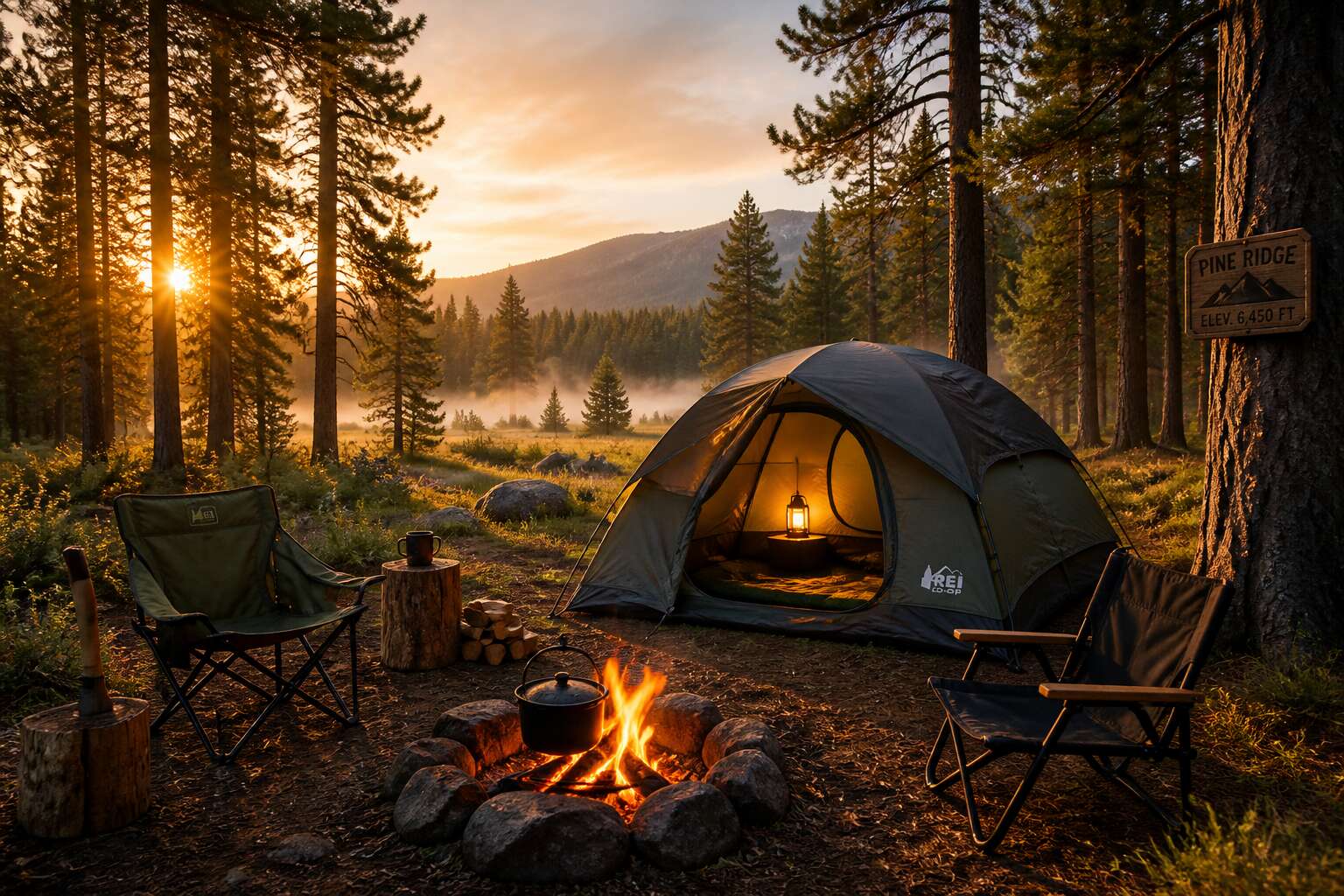
Choosing the Perfect Tent Camping Spot
Assess terrain and drainage
A seemingly perfect clearing can turn into a quagmire after one night of rain. Before dropping your gear, walk the entire site and study the slope. Slight gradients are acceptable, but keep the head of your sleep area higher than the foot. Compacted soil drains better than loose duff.
Drainage matters as much as slope. Trace where rainwater would travel. Avoid dry creek beds and ditches, which become rivers in minutes. Across most tent campgrounds, the difference between a dry night and a soggy one is the terrain you select.
When you inspect a pitch at any of the tent campgrounds on your shortlist:
- Check for ant mounds or burrows before staking.
- Scrape back the topsoil to see if moisture sits underneath.
- Look for grass that leans flat, a sign of previous flooding.
The ground reveals its history. Read it correctly and your night remains dry, level, and comfortable.
Understand local regulations
A single unread regulation can end a weekend before it begins. Local rules govern South Africa’s tent campgrounds with quiet authority. I have watched campers pack up at dawn after a ranger cited them for an illegal fire. The rules are absolute.
- Reservations are often mandatory, and walk-ins are turned away.
- Fire bans change without warning.
- Waste policies vary; some places demand you carry everything out.
The finest tent campgrounds publish their rules at the entrance. The wise camper reads them online, weeks before packing. A permit is not a formality. It is the agreement that keeps both you and the wilderness whole.
Consider proximity to water sources
Forty metres is the magic number in my experience. That is the distance you will happily walk for a bucket of clean water before the chore grinds you down. A tent campground with a dependable water source nearby turns a dry, dusty pitch into a proper camp. I have watched campers at Karoo sites ration every drop, while others downstream of a Lowveld spring cook, wash and drink without a second thought.
Water shapes the rhythm of your stay. Morning coffee, evening dishes, a rinse before bed; each task becomes effortless when the source is close. Yet proximity alone is not enough. You must verify the water quality, the seasonal reliability and the path you will take to reach it.
- Is the source a borehole tap, a river or a dam?
- Has the recent rainfall been enough to keep it flowing?
- Are there signs of animal activity near the water’s edge?
The finest tent campgrounds mark their water points clearly on a map. Study that map before you pitch, and you will never curse a dry morning.
Evaluate nighttime noise potential
Nighttime noise can dissolve the peace at tent campgrounds. I once pitched beneath a seemingly tranquil koppie, only to discover a freight railway line hidden behind its shoulder. The 3 a.m. rattle shook the stars.
Before you peg, stand still and listen. Ask the local storekeeper about weekend gatherings or rooster habits. Survey the seasonal rhythm. Consider these common culprits:
- Highways and gravel roads with nocturnal trucks
- Farm animals and herding dogs
- Neighbouring campsites with loud music or generators
- Rivers that roar after rain or frogs that chorus through the night
Every tent campground carries its own acoustic fingerprint. Read it with your ears, and you will choose a spot that cradles your sleep.
Packing the Right Tent Camping Essentials
Selecting a weather-appropriate shelter
Your tent is the fulcrum of your entire outdoor experience, yet it often becomes an afterthought once the campsite is selected. Choosing a shelter for South African tent campgrounds demands a hard look at regional weather patterns, not just the brochure photos. A Karoo summer can deliver scorching heat followed by a howling thunderstorm, while a Mistbelt forest on the Garden Route might present persistent drizzle. This climate consideration dictates your material choice and structural design more than any other factor.
The fabric and frame must work in concert with the elements. For high-UV areas, a thicker polyester with a polyurethane coating offers better sun resistance than standard nylon, which degrades quickly under the African sun. Conversely, for high-humidity zones, a canvas or cotton blend breathes effectively, reducing internal condensation that soaks your sleeping bag. The type of poles also matters for stability against sudden gusts:
– Aluminum poles are lighter and stronger than fibreglass, making them ideal for exposed coastal camps where wind is a constant companion.
– Fibreglass poles are budget-friendly and flexible, but they can splinter under severe stress.
– A free-standing dome design offers quicker setup, while a tunnel tent provides more living space but requires staking to maintain its shape.
Ultimately, your shelter is the primary interface between you and the environment. Investing time to match the tent’s design to the typical forecast is not about luxury; it is about preserving your energy for the adventures ahead. This decision makes the difference between a restorative night and a restless one, impacting how you experience the beauty of local tent campgrounds.
Mastering your sleep system
Your sleep system determines whether you wake refreshed or defeated. In South African tent campgrounds, temperature swings can reach 20 degrees by midnight. A sleeping bag rated for summer will betray you on the Highveld plateau.
Consider the ground first. A self-inflating mat with an R-value of 3 or higher insulates you from the cold earth. Without it, your body heat vanishes into the soil. Pair that with a quality pillow, not a rolled-up jacket.
- A four-season sleeping bag for winter excursions
- A silk liner for warmer nights
- A repair kit for punctured mats
I have learned to test my setup at home before relying on it under the stars. The right sleep system turns a restless night into a quiet reprieve.
Outdoor cooking made easy
Most campers overpack. They haul duffels of gear into tent campgrounds and forget the basics. Pack with intent. Every item should have a purpose in your bakkie or roof rack.
Outdoor cooking made easy starts with a compact kit. My essentials:
- Two burner gas stove with a windscreen
- Cast iron skillet and a lightweight kettle
- Sharp knife, cutting board, and pot gripper
- Washing basin and biodegradable soap
That combination handles breakfast, lunch, and dinner! Add a braai grid for evenings when the coals are ready. I learned this after years of packing too much. The best meals under canvas come from simple ingredients and reliable tools. Keep your kit compact and your menu flexible.
Power and lighting solutions
Twilight falls quickly across the Karoo, and tent campgrounds grow quiet. I have learned to carry power and light with care. A foldable solar panel, a power bank with enough capacity for two full phone charges, and a USB rechargeable lantern form the core of my lighting kit. These items weigh little and have rescued many evenings.
My kit:
- A headlamp with a red mode for late night trips
- A lantern that hangs from the tent ridge
- A power bank that charges from the solar panel
The trick is to charge the power bank while you drive or during the day. Most tent campgrounds have no plug points at the site, so you become your own grid. I use a single USB hub to keep the lantern, phone, and headlamp fed from one bank. A spare set of batteries goes in the side pocket for emergencies.
Clothing for all elements
Cotton betrays you in the wild. Once wet, it stays wet and pulls body heat straight from your bones. I rely on merino base layers and a thin synthetic mid layer. Over that sits a windproof shell, which matters because tent campgrounds in the Karoo shift from oven heat to biting cold within a single hour.
Your legs need equal attention. Convertible trousers serve as shorts under midday sun and long pants once shadows stretch. For feet, carry two pairs of socks, one for walking and one solely for sleep. My clothing alone fills half a dry bag before the cooking gear even appears.
- Sun hat with a brim wide enough to shade your neck
- Buff or scarf for dust storms
- Lightweight rain jacket that compresses to fist size
Evening arrives fast, and a fleece jacket becomes your quiet companion. The fabrics wick moisture while you sit by the fire and listen to the veld settle into darkness.
Setting Up a Comfortable Campground Base
Pitching your tent on solid ground
Most tent campgrounds in South Africa punish the unprepared. A comfortable base camp begins with the pitch itself. I pull the fabric taut, angle the pegs at 45 degrees and drive them flush. Loose webbing means a flapping night and a tired morning.
Your tent is the bedroom, not the living room. Camp chairs, coolers and boots belong under a small tarp outside to preserve floor space. Inside, keep sleeping gear on one side and personal items near the door. A doormat or old towel at the entrance traps grit before it reaches your sleeping bag.
Arranging your sleeping area for rest
Dusk in tent campgrounds across this landscape turns the sky to rust and smoke. I find that the arrangement of the sleeping space determines whether the night brings rest or restless wandering. The pad lies flat first, always. Then I fold the blanket in a deliberate manner, tucking the edges under the cushion to seal out the creeping chill.
I keep a small lantern by the pillow, the only witness to my midnight turnings. Clothes for the morning sit folded at the foot of the bed, ready in the pre-dawn gloom. In these tent campgrounds, the bed itself becomes a sanctuary against the unknown that huffs beyond the zipper. The mind settles when the sleeping quarters are laid with intention.
Building a functional camp kitchen
The heart of any camp is not the tent but the place where coffee brews at dawn and stew simmers at dusk. I have seen many tent campgrounds where travelers neglect this space, and their trip suffers for it. A camp kitchen needs a stable table, level ground for the stove, and a water source within easy reach. The wind here can shift without warning, so a simple screen of canvas or a parked vehicle becomes a shield for the flame.
I unpack the essential tools before I pitch the tent. The gas bottle and the two-burner stove get their spot first, clear of dry grass and foot traffic. Then I arrange the rest:
– A wash basin with biodegradable soap for dishes
– A food crate with a tight lid to keep out ants and rodents
– A cutting board, a sharp knife, and a pot with a secure handle
– A cloth line strung between two poles for drying utensils and towels
Water is the heavy burden of any camp. I fill a large jerry can at the last tap before the gravel road turns to dust, because hauling from the river is tiring work. The cooking station stays within arm’s reach of this water supply, so I do not have to trudge back and forth while a meal is half prepared. In these tent campgrounds, efficiency translates to comfort. A lantern hung above the table draws fewer moths than one placed on the ground, and it casts enough light to see the salt and pepper without squinting.
By the time the first stars appear, the kitchen is a home of its own. The dishes are washed and stacked. The stove is covered against the dew. The fire ring, if I have built one, glows with low embers. I have learned that a tidy cooking area keeps the wild at bay, invites conversation from neighboring campers, and turns a simple meal into the best part of the day. The pot of coffee sits ready for the morning, and the camp settles into a quiet rhythm that carries through the night.
Managing waste and trash properly
Waste is the shadow that follows every camp. In tent campgrounds, the leftovers of yesterday’s meal carry menace if left unguarded. I have pulled a soaked paper bag from the bushveld at dawn, its contents crawling with something that wanted the dark.
The scraps of a braai summon what you do not wish to meet by torchlight. I keep three receptacles at the edge of camp, one for burnables, one for recyclables, one for the inescapable rest. The system is mundane but essential.
Here is the order I follow:
- Rinse every can and bottle at the last water point.
- Double bag anything fragrant; the wrapper that smells is the one night creatures follow.
- Seal the bin against jackal and mongoose.
In tent campgrounds, the condition of your corner is the first thing the next traveler sees. A clean camp is quiet. A dirty one speaks in its own language, and I refuse to learn it!
Creating privacy with tarps and screens
The communal hush of a tent campground is a paradox. Strangers exist in close proximity, yet each canvas square holds a private world. The secret to that seclusion is a deliberate act of creation, a way of drawing your own lines in the dust. A tarp strung at an angle does more than block the morning sun. It shields your morning coffee ritual from wandering eyes. A simple screen of hessian or shade cloth, tied between two trees, transforms a patch of grass into a vestibule for your own use. These portable barriers are the unsung architects of solitude in tent campgrounds.
The manner of your privacy is a personal choice. Some prefer a full perimeter, while others only need a shield from the main path. The correct configuration depends on the wind, the sun, and the particular mood you wish to cultivate.
– A freestanding screen for a quick and temporary windbreak.
– A ridgeline strung between trees for hanging a tarp overhead.
– Weighted guy ropes to secure the tarp against a gust.
The light through a woven screen creates a particular quiet, a sense of being both present and unseen. This is the true luxury of the open air. To arrive, to stake your claim, and to build a sanctuary of canvas and cord is to master the art of being alone in a crowd. The final look of your base, with its folded corners and neat guylines, tells the story of a novice or a seasoned dweller. The careful arrangement of a tarp is a silent language in tent campgrounds, speaking of respect for the space and for the neighbours who share the landscape with you.
Troubleshooting common setup pitfalls
One crooked pole and a sagging fly test your patience! The ground looks flatter than it is. You set up fast, then realize the sleeping slope tilts toward the door. In tent campgrounds, a comfortable base begins with a slow walk around the pitch. I kick the turf and check for hidden roots and old fire rings. Moving the tent two meters before hammering a single peg prevents a restless night.
Common pitfalls repeat themselves:
- A loose guy line in a gust makes the fly slap all night.
- Soft sand without anchors collapses the side.
- A door facing uphill invites dust and water inside.
The wind picks up at midnight. A structure with adjusted corners stays still. The one with a slack line does not. That difference comes from the extra minute spent tightening each peg.
Making the Most of Campground Facilities
Hygiene and restroom strategies
Wake before the queues at a popular tent campground and you will find the ablution block at its best. Early mornings mean clean floors and full toilet paper. I pack a headlamp for pre-dawn trips, because South African campsites often have dim lighting between the tent and the facilities.
Hygiene in communal bathrooms requires a personal kit. Carry your own soap, a spray bottle of sanitiser, and a microfiber towel. Flip-flops are non-negotiable for the shower floor. Many campers bring a bucket for washing clothes, which keeps the basin free.
- Check peak hours for the block.
- Note wind direction for shower slots.
- Carry a clothesline; hooks are scarce.
Restroom strategies extend beyond the building. At night, a designated bottle in the vestibule saves a cold walk, but only if you pack it out. That discipline keeps the bush around tent campgrounds pristine.
Fire pit and grill utilization
The fire pit at tent campgrounds is a shared point of focus. I have learned to read the previous occupant’s habits in the ash. A clean ring tells me they cared; scattered coals suggest they left in haste. The grill requires similar attention. Scrape it before you use it, not after, because the residual heat makes the work easier.
Stack your wood loosely, allowing air to move through. For those who prefer structure:
- Position the grate at an angle to catch the wind.
- Let the flames die to embers before cooking.
- Douse everything with water before you sleep.
This order prevents wasted fuel and avoids the midnight flare that sends sparks into the canvas. The fire’s discipline, once mastered, turns a basic utility into something worth gathering around.
Recreational opportunities on site
The best tent campgrounds offer more than a patch of dirt for your tent. I have seen campers overlook the ranger-led walks or the evening braai meetups. Those activities are where the real character emerges. One afternoon, I joined a guided birdwatching stroll that revealed a hidden marsh just beyond the perimeter. That was the kind of thing I would have missed if I had stayed huddled at my own site.
Recreational options vary widely, so check the notice board before you settle. Some places have a tennis court, others have a swimming pool or a petanque court. Here is what I look for when assessing the on-site amusements:
- Trail maps that show shortcuts to viewpoints
- A communal herb garden that guests can use
- A weekly potluck or craft market
These small features turn a basic stay into a memorable outing. The trick is to ask the warden early, then plan your idle hours around what is available.
Staying Safe and Leave No Trace at Your Camping Destination
Wildlife interactions and food storage
A hungry baboon can open a cooler faster than I can open a wine box, a sobering thought for anyone booking tent campgrounds in South Africa. Wildlife interactions are a negotiation, not a surprise attraction.
In tent campgrounds, food storage demands a hard sided container, a foxproof locker when provided, or a suspension line three meters off the ground. Your night’s sanity depends on this choice:
- Cooked meals release odors that carry further than expected.
- Leftovers draw every critter within a kilometer to your campsite.
- A headlamp makes your snack stash visible to nocturnal animals.
Leave No Trace means erasing all food traces. A single dropped crumb can turn a harmless gennet into a midnight intruder. Dishes get washed away from water sources, and greywater gets scattered fifty meters from camp. Only the sunrise should visit your camp.
Weather warning systems and emergency plans
The sky over the Cederberg can turn from cerulean to bruised purple in fifteen minutes. That transition is not poetry, it is the first line of your emergency plan. For anyone booking tent campgrounds in South Africa, the weather is not a backdrop but an active participant. A forecast of 20% chance of rain means a 100% chance you should check the barometer again before dusk.
Most serious incidents in tent campgrounds begin with a failure to respect the sky’s vocabulary. The South African Weather Service provides alerts, but a cellphone signal is a luxury, not a guarantee, in the kloofs and valleys where the best sites hide. You need a manual system. A sudden drop in temperature, wind that shifts direction, and birds moving to lower branches all precede the storm. These signs are your primary warning system.
An emergency plan is a conversation you have with your fellow campers before the fire is lit. Establish a meeting point at the camp entrance and agree on a signal for trouble. Know the location of the nearest medical facility and the shortest route to the main road. A whistle tied to your tent pole cuts through wind louder than any shout. Your plan should also account for the weather’s aftermath, not just its arrival. Flash floods in dry riverbeds occur hours after rain stops falling upstream.
A basic emergency kit in tent campgrounds requires little space. A dry bag with a thermal blanket, a lighter in a waterproof case, a headlamp with spare batteries, and a basic first aid kit for cuts and bites. Keep a physical map, not just a digital one, in this bag. The plan is simple but requires discipline.
Respecting the landscape’s vulnerability is as crucial as respecting its power. The ground you sleep on is a living system. In high-traffic tent campgrounds, this means confining your impact to established pads and durable surfaces. Walk the same path to the ablution block, even if it is muddy. The desire for a dry boot is no excuse to trample new ground. When you leave, the site should show no evidence of your presence beyond the flattened grass.
The fire pit holds ash that will become part of the soil. That is a natural cycle, but only if the fire is fully extinguished and the coals are cold to the touch. A fire that smolders overnight is a liability for you and a hazard for the rangers who manage the land. Water used for washing dishes, even with biodegradable soap, should be strained and scattered far from any water source and the camp itself. The same principle that protects you from wildlife protects the land from you. You arrive in tent campgrounds as a guest, and you leave as a memory, nothing more. The wilderness endures because it is treated with a reverence that borders on paranoia. The mission is to observe, enjoy, and then vanish without a trace, leaving the silence intact for the next traveler.
Fire prevention and control
In tent campgrounds across the Cederberg, fire is a guest that must be watched closely. The wind that shifts before a storm can carry an ember into dry fynbos within seconds. Your fire pit should sit three metres from your tent and any overhanging branches. Clear the ground down to mineral soil before striking a match.
A bucket of water and a spade belong beside the pit, not buried in the car boot. When you pour water over the coals, stir them with the spade until every hiss stops. Ash that still radiates warmth is a fire that has not ended. It waits for the afternoon wind to awaken it.
Leave the stones of your fire ring in place. The next camper will build their own circle, and the scars of ten thousand fires should not multiply. Fire control in tent campgrounds is a quiet act of guardianship.
Respecting campground quiet hours
The quiet hours rule at tent campgrounds is not a curfew. It is a shared agreement that the night belongs to everyone. At 10pm, voices lower, lanterns dim, and footfall softens. A zipper becomes the loudest announcement of your presence.
Respecting quiet hours is a safety measure. A camper who cannot hear approaching weather or a disturbed animal is less prepared. You also permit neighbours to hear their own surroundings. Leave No Trace extends beyond physical scars. Silence, once broken, does not recover overnight.
The transition into quiet hours has its own textures:
- The last pot scrubbed before the tap runs dry.
- Children’s laughter fading into whispered stories.
- Red torch beams replacing white light.
When you pass another tent at midnight, imagine the person inside. Their rest is part of their experience. Your footsteps carry weight. In tent campgrounds, courtesy is the quietest form of stewardship.
Eco-friendly camping practices
Safety and silence share the same rhythm at tent campgrounds. A camper who scans the ground for sharp debris avoids a morning wound. One who zips the tent before dark keeps insects out. These small choices are the first line of protection.
Leave No Trace extends to what you cannot see. Moss crushed by a boot may take a decade to return. So walk only on existing paths. Leave rocks, plants, and feathers where they lie. Let every creature keep its own food.
Eco-friendly camping practices also include reef-safe sunscreen and refillable gas cartridges. The less you impose, the more the wild offers. In this way, your safety and the land’s integrity grow from the same silence.


0 Comments