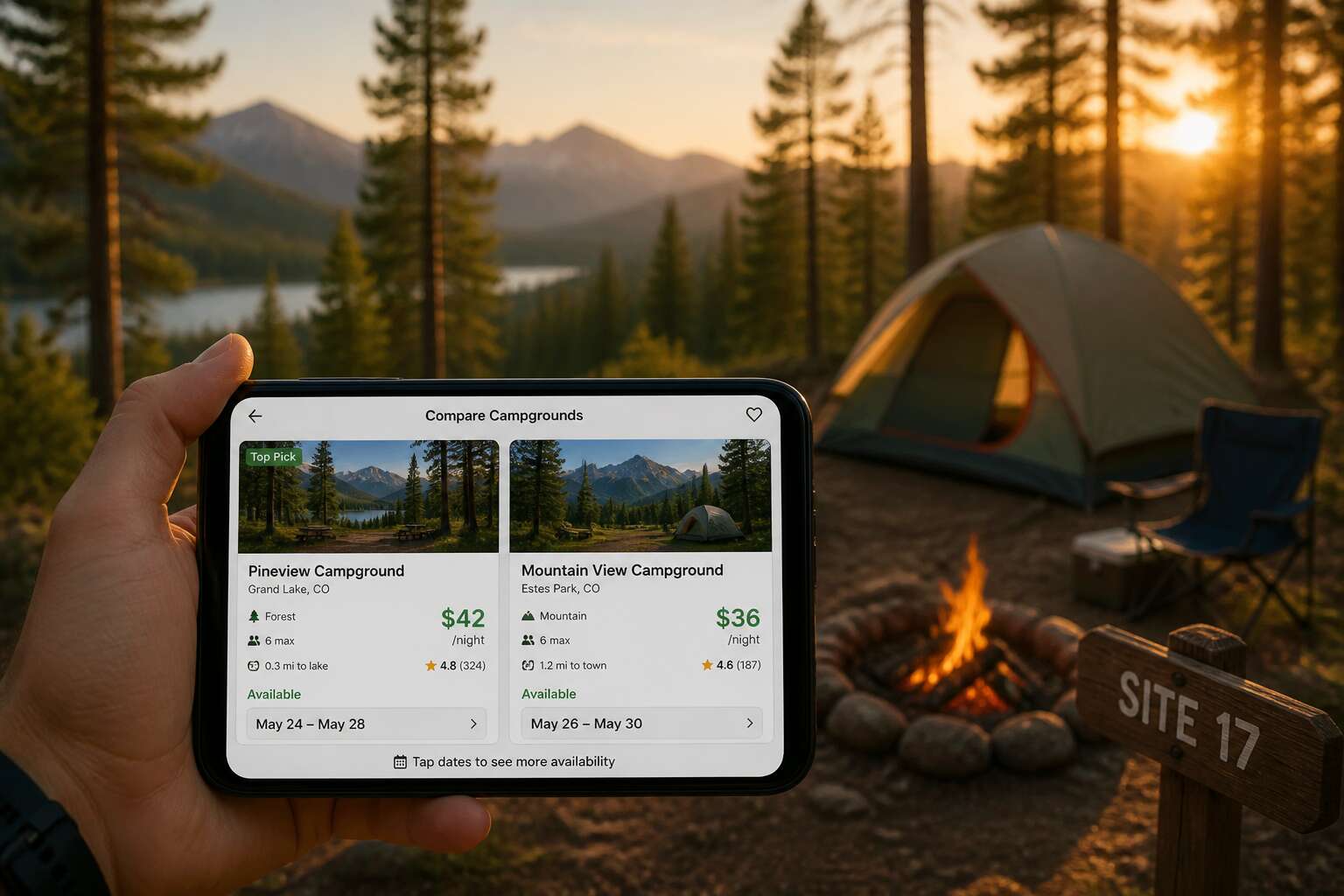
Why Compare Camping Rates and Openings?
The Challenge of Scattered Information Across Park Websites
One afternoon of checking rates and openings across a dozen park websites left me with more tabs than answers. The data exists, but it hides behind scattered PDFs and dated calendars. That is precisely why platforms to compare campground prices and availability have become essential for South African travellers.
The trouble is not a lack of information. It is the fragmentation. Each reserve speaks its own dialect of tariffs and seasonal closures. You must translate between municipal portals, provincial pages, and national park systems. A single comparison can consume hours!
- Rate structures shift without notice.
- Openings vary by rainfall and fire risk.
- Last minute cancellations never appear online.
When you finally assemble the pieces, the gaps remain. Many sites update infrequently, or they omit details like electricity hookups and pet policies. Platforms to compare campground prices and availability gather those fragments into one reliable whole, saving hours of tedious work.
How Price and Availability Vary by Season, Location, and Amenities
Rates for a campsite in the Drakensberg can swing by nearly half between a quiet Tuesday in February and a December school holiday. The same plot of grass becomes more valuable when schools close and the rain clears. Availability follows its own logic. A coastal reserve may have openings after a dry spell, while a bushveld camp stays full for months. Amenities change the picture too. Electrified stands, hot water, and security patrols cost more. Rustic sites offer a bargain but demand self sufficiency.
This is why platforms to compare campground prices and availability matter. They collate these fluctuations into one view, sparing you the arithmetic of seasonality.
For instance, you might check:
– Peak season rates at national parks
– Low season specials at municipal resorts
– Last minute availability at private nature reserves
Without a comparison tool, you would need to open a dozen tabs and still miss the nuance.
The Financial and Planning Benefits of Using Aggregated Data
People will enthusiastically compare the price of a cappuccino at three different coffee shops, yet happily book a campsite based on a single website’s say-so. For a patch of grass. With possibly a communal braai and a view of a stunning cliff. The stakes are slightly higher than a caffeine fix. This is where platforms to compare campground prices and availability earn their keep. These tools aggregate data from multiple sources, transforming a frantic Sunday evening of research into a simple price check. The financial benefit is immediate. You could pay R150 for a rustic stand in a municipal reserve or R850 for an electrified slab with private ablutions at a private lodge. Both offer a place to pitch a tent. One leaves your wallet feeling significantly less windswept.
Aggregated data also eliminates the need for a personal booking spreadsheet, which is a sad state of affairs for a holiday. Using a comparison platform lets you plan a multi-stop trip with a clear view of the total cost. This foresight prevents the dreaded post-booking shock when you realise the “cheap” coastal spot also requires a daily conservation fee. The planning benefits extend beyond your wallet. Seeing a clear picture of what is open allows you to arrange your route logically, ensuring you don’t spend a day of your leave driving in the wrong direction. The decision becomes less about guesswork and more about matching your budget to your desired experience.
- You can identify which campsites offer the best value for longer stays without hidden costs.
- You gain the ability to spot price anomalies for the same experience in different regions.
- You can verify if a premium price actually includes essential amenities or just a nice name.
The information transforms vague intentions into concrete plans. You end up paying for the experience you actually want, not the one you stumbled upon after hours of searching. Using these platforms to compare campground prices and availability means you are not just booking a holiday, you are managing a budget with a significant piece of data in front of you. It is a tactical approach to leisure, which sounds like a contradiction, but it is simply the smart way to secure a great spot under the African sky without parting with more of your hard earned cash than necessary. Would you prefer to discover the price difference at the gate or before you pack the cooler box? I know which one I prefer.
Common Pitfalls When Relying on a Single Campground Website
There is a particular kind of dread that arrives with the email confirmation for a campsite you have never physically seen. Did you actually get a level spot, or are you pitching on a slope that rivals Table Mountain? Relying on a single website for this decision is a gamble, especially when that site is the only source of truth for its own bookings. Fewer than one in five campers cross-check a second source before paying a deposit, which is a startling number when you consider the non-refundable nature of most reservations.
The pitfalls of the single website approach are not always obvious. A park’s own booking portal is a tool for filling beds, not for informing the public. It will rarely advertise that a neighbouring reserve offers the same exposure to the sunset for a fraction of the price. The information you need to compare campground prices and availability is often buried beneath a layer of marketing language that describes “rustic” as a synonym for “no water.”
Consider the specific frustrations that arise from this lack of oversight:
– You might assume the conservation fee is included, only to find it charged at the gate.
– You could miss a seasonal closure that the official site only mentions in a downloadable PDF.
– You may overlook that the “camping” rate is actually per person, not per stand, doubling your expected cost.
The primary danger is the illusion of completeness. If a website says they have space, you book it. You do not question whether the price is fair because you have no baseline. Platforms to compare campground prices and availability expose the discrepancies between those official sources. They reveal that one estuary campsite charges a premium for a view of a construction site, while a hidden gem three kilometres down the road offers a better price and a working shower. The difference between a memorable holiday and a financial headache is simply knowing where to look. The single website leaves you in the dark; the comparison platform turns the lights on.
Essential Criteria for Evaluating Comparison Websites
Coverage: How Many Parks, States, and Reservation Systems Are Included
Coverage defines a platform’s practical usefulness. Before trusting any comparison result, check how many parks the database actually holds. A tool that lists only the major names misses the smaller provincial reserves and private sites that often offer the best rates. The same applies to geographic spread.
Some platforms to compare campground prices and availability excel in one province but fall silent elsewhere. Look for explicit details on the reservation systems linked into the service. For example:
- Does it integrate with SANParks, CapeNature, and Ezemvelo systems?
- Does it include municipal campsites and farm stays?
- Is the data refreshed daily or only seasonally?
Transparent platforms disclose their sources. Vague phrases like “hundreds of parks” mean little without a searchable park list or a filter by province and reservation provider. So when evaluating platforms to compare campground prices and availability, always verify the underlying database before making plans.
Real-Time Data Accuracy and Update Frequency
A stale price looks real until you try to book it. Then it vanishes. The same applies to availability. A comparison tool must prove its data is alive, not archived. Update frequency separates a useful service from a liability.
Platforms to compare campground prices and availability that sync hourly with reservation systems will surface cancellations and last-minute openings. Weekly refreshes miss them entirely. In South Africa, where a weekend at a CapeNature site can sell out in minutes, that lag costs you the trip.
- Look for a visible last-synced timestamp on search results
- Confirm whether prices update live or on a nightly batch
- Test if cancelled sites disappear from the listing quickly
I have watched a platform show an open site, only for the park’s own system to reject the booking moments later. That gap between display and reality is the real expense. When evaluating platforms to compare campground prices and availability, treat data freshness as the core feature, not a footnote!
User Interface and Ease of Narrowing Down Your Search
An elegant interface means nothing if your search results force you to sift through irrelevant noise. The finest platforms to compare campground prices and availability treat filtering as an art. They let you discard what you do not need before you ever see it.
Consider the specifics that matter on a South African weekend escape:
- Distance from Cape Town or Johannesburg
- Electricity versus off grid stands
- Pet policies and gate times
- Braai facilities and water access
A thoughtful interface presents these as immediate options, not buried settings. It anticipates that you want fewer choices, not more. The ease of narrowing down your search determines whether you spend ten minutes planning or two hours hunting. That difference is the quiet value of a well designed tool.
Filtering Capabilities: Dates, Site Types, and Amenities
Filtering reveals how a platform treats its users. When assessing platforms to compare campground prices and availability, test the date filter first. Exact ranges matter because December bookings in the Drakensberg vanish within days, and a rigid season selector wastes your time.
Site type filters deserve equal scrutiny. A powered stand is not an off grid plot, and the best tools separate them clearly. Amenity filters should match South African camping realities: braai facilities, water access, pet policies, and gate times. Their absence forces manual work.
- Can you enter exact arrival and departure dates?
- Are electricity, off grid, and caravan stands distinct options?
- Do amenity filters appear before you open a listing?
The difference between a platform that saves time and one that burns it often rests on these three points.
Mobile Responsiveness and App Availability
Booking a campsite while on the move is standard practice in South Africa. Mobile responsiveness determines whether the process feels effortless or chaotic. It is a core criterion for platforms to compare campground prices and availability. Test the interface on a small screen. The navigation must be zoom-free. Buttons need to be large enough to press accurately with a thumb.
Consider app availability for frequent travelers. A dedicated app often provides cached data for areas with unreliable connectivity, such as the Cederberg or the Wild Coast. Some tools require a constant signal, which renders the tool useless in a remote reserve.
The mobile experience carries over to the final booking gateway. The true test happens in the field, not on fibre.
- Does the payment page load smoothly on 3G?
- Are there offline viewing options?
- Does the platform send immediate confirmations via SMS?
Hidden Fees and Whether the Platform Adds a Service Charge
A quoted rate is a starting point, not a promise. The true cost of a weekend escape often materializes only at the final payment screen. When vetting platforms to compare campground prices and availability, the fee structure reveals a platform’s character. Some portals lure you with a low nightly base rate, only to bolt on a platform service charge, a separate conservation levy, or a cleaning fee. Scrutinize the line items. The breakdown should be explicit before authorization.
Fees to watch for:
- A clear line item for the park’s base rate.
- An explicit statement if the platform adds a service charge.
- Visible mention of municipal or reserve levies.
I once abandoned a booking because the final total inflated by twenty percent. Mature platforms list fees upfront. They disclose whether the platform adds a service charge or if the price is pure park revenue. Vagueness there is a red flag. Treat the total price as a fixed contract, not a variable surprise.
Leading Online Tools for Finding Campsite Availability and Costs
National Park Reservation Portals and Their Built-In Search Functions
A national park reservation portal often operates with a bureaucratic charm. Its built-in search functions let you choose your park, select dates, and view remaining inventory. The process is direct and honest.
For many travellers, these tools are the starting point of any booking journey. They are rarely platforms to compare campground prices and availability across many jurisdictions, yet they offer certainty. When you book through the official portal, you deal with the source directly. There is comfort in that clarity, even as you click through pages that feel constructed by a committee in the 1990s.
Private Aggregators That Pull From Multiple Sources
Private aggregators are the practical answer to fragmented park reservation systems. These platforms to compare campground prices and availability pull data from dozens of sources and present everything in a single searchable grid. Instead of opening six browser tabs to check dates and rates across provinces, you see the full picture immediately.
Not all aggregators perform equally, and their differences matter.
- Update frequency determines whether you see live availability or stale inventory.
- Fees range from listed rates to checkout service charges.
- Coverage spans a few South African parks or hundreds of thousands of campsites globally.
Data quality varies too. Manual reporting from park offices lags behind direct integration with reservation APIs.
State and Regional Campground Listing Networks
Campers who plan across provinces learn quickly that the biggest discovery tools are not always the official ones. Leading online tools for finding campsite availability and costs often include community maintained directories, map based explorers, and specialised booking search engines. Each one carries a different view of what is open, and their data freshness varies considerably.
State and regional campground listing networks do the needed work of surfacing smaller grounds. Provincial reserve boards, tourism associations, and municipal park offices each publish their own inventory. For a Karoo weekend or a KwaZulu Natal coast trip, these networks frequently offer the only unified list of who has space and at what rate.
- Verify if the network connects to live booking feeds or just lists contact details.
- Check if quoted fees include gate levies or utility charges.
Used together, these sources act as strong platforms to compare campground prices and availability before you commit to a route.
Mobile Apps That Sync With Your GPS and Offer Last-Minute Deals
Mobile apps have changed how quickly you can find open space. Open the map, see what sits near you, and check vacancies before you leave the tar road. A good app syncs with your GPS and shows options within a chosen radius. This makes platforms to compare campground prices and availability useful while you are still driving.
Last-minute deals appear because parks face empty stands. Apps that carry these offers refresh inventory every few minutes. You might find a coastal site at half the weekend rate simply because a booking fell through.
- Location-based alerts that fire when you cross a region
- Offline maps for areas with weak signal
- Direct links to the park’s official reservation page
Check the quoted price carefully. Apps sometimes show nightly rates without levies, and the final cost can rise by a third once conservation fees and utility charges appear. Cross reference the figure against the park’s rate sheet before you pay.
Social Media Groups and Forums as Unofficial Comparison Hubs
Campground booking websites have evolved into intricate instruments. They pull live inventory from multiple systems, letting you scan a province in seconds. For South African campers, this is a revelation. No more phoning nine park offices!
An unofficial layer of intelligence often outperforms the formal platforms. Social media groups and forums, where seasoned campers post findings, operate as a collective memory. Someone reports that a Karoo site is overpriced. Another discovers a coastal reserve just released cancelled dates. Platforms to compare campground prices and availability work best when you pair structured data with this human chatter. I have learned more from one forum thread than from many official portals.
Consider what a good group offers:
- Photographs of the actual stand, not the brochure version
- Current reports on water pressure and shade quality
- Warnings about booking glitches at specific parks
The formal tools supply structure. The informal networks supply truth.
Official Tourism Board Websites With Integrated Campground Databases
Official tourism board websites often feel like a digital wild goose chase, yet their integrated campground databases are quietly powerful. In South Africa, bodies like SANParks and provincial tourism authorities run booking systems that pull live inventory straight from park offices. These platforms to compare campground prices and availability skip the middleman entirely, which means no service fees and no inflated rates. I have found Western Cape’s database particularly sharp, showing real time stand availability across reserves. The data comes from park managers themselves, so the numbers actually match reality.
- Direct access to official tariff sheets
- Live calendar syncing for each stand
- Park specific alerts on season closures
The catch is inconsistency. Mpumalanga updates daily, while the Northern Cape lags for weeks. Filtering tools vary wildly, and some smaller tourism boards still bury the search function under a ‘Nature’ dropdown. For a camper who values accuracy over flashiness, these portals are a hidden gem. Just pack your patience for the occasional glitch.
Maximizing Your Use of Campground Search Aggregators
Setting Up Price Alerts and Notifications for Desired Dates
Price alerts on aggregator platforms save you from constant page refreshing. You enter your desired dates and let the system notify you when a site drops in price or becomes available. Many platforms to compare campground prices and availability offer these notifications for free, which is remarkable given the manual effort they save.
The timing matters. Some platforms send immediate notifications, while others batch them daily. For popular South African destinations like Kruger National Park or the Garden Route, immediate alerts are worth setting up. Booking windows for these spots fill quickly.
A practical approach involves setting multiple alerts for the same trip:
– Adjust your dates by a day or two on each alert
– Track both cancellation openings and price drops
– Use different platforms for the same park to compare notification speeds
Coverage across several platforms to compare campground prices and availability gives you an edge. I once secured a cancelled site at a coastal reserve within minutes of the alert arriving.
Leveraging Flexible Search Tools to Find Hidden Availability
A single day shift in your arrival date can double your options. Most travellers punch in exact dates and cling to them, yet platforms to compare campground prices and availability reward those who loosen their grip. Shifting a departure by one day often uncovers sites that were invisible moments earlier.
The trick lies in how you manipulate the interface. Instead of a fixed weekend, search across a three day window. Some aggregators let you filter by any arrival or display a calendar heatmap of open slots. This works well for South African reserves where Saturday to Saturday bookings dominate.
These interfaces include functions such as:
– Toggle between site types, not just dates
– Search by province rather than a single park
– Use map view to spot cancellations outside your usual radius
These adjustments reveal hidden availability that standard searches omit. Pairing this behaviour with platforms to compare campground prices and availability gives a fuller picture of what is genuinely bookable.
Reading Between the Lines: Reviews and User Ratings on Comparison Sites
The star rating glows at you, a confident 4.8. It feels definitive, yet it hides a more complex truth. Most travelers stop at that number, but the real secrets live in the narrative details of recent guest comments. A consistent pattern of complaints about a noisy perimeter fence near the Kruger gate tells you more than a hundred perfect scores from peak season visitors.
You need to read between the lines of these aggregated testimonials to find genuine value. Look for specific mentions of site spacing or the actual condition of the ablution blocks, not just generic praise. This kind of qualitative data transforms raw listings into reliable intelligence.
– Focus on recent reviews to gauge current management standards.
– Compare photo uploads against the official site images for accuracy.
– Note how the property responds to negative feedback; it reveals their service ethos.
When you use platforms to compare campground prices and availability, always cross-reference the comments with the official park website. An aggregator often collects reviews from multiple sources, which can dilute the specific context of a reserve like Addo or Augrabies. The price might be identical, but the value differs greatly if one site offers steady shade and another is a dusty, open patch. By digging into the details, you uncover the true character of a spot, ensuring your hard-earned holiday money buys the quiet, safe, and beautiful experience you deserve.
Booking Directly vs. Through an Aggregator: Pros and Cons
A split second of hesitation can cost you the perfect site. The aggregator shows availability, but the official booking engine might hold back premium stands for direct bookings. That is the trade-off. Using platforms to compare campground prices and availability gives you a broad view of what exists, but the final transaction often carries a hidden variable.
Booking through an aggregator offers speed. You see multiple reserves, compare costs, and reserve a spot within minutes. The convenience is real. However, the aggregator cannot always reflect the specific nuances of a park like Addo or Augrabies. A direct call to the reserve office can reveal site details that a database simply misses.
– Direct booking often bypasses service fees.
– Aggregators show real-time availability across many parks at once.
– Reserve offices can offer upgrades or alternate sites on request.
– Cancellation policies differ sharply between the two channels.
The real strategic move is to use both. Scan the aggregator for the lay of the land, then check the official portal to see if the price or site conditions match. Some travellers report that direct booking unlocks quieter loops or shaded stands that never appear on the third-party interface. Others find that the aggregator’s cancellation flexibility saves them when plans shift.
Combining Multiple Platforms to Cross-Verify Inventory
Time is the currency of a well-planned trip, and the shrewd camper knows that a single glance never tells the whole story. Cross-referencing multiple platforms to compare campground prices and availability is not about paranoia; it is about verification. A site shown as booked on one aggregator might appear as open on another due to sync delays or contractual obligations. This discrepancy is where the experienced traveller finds their advantage, spotting the quiet opening that others miss.
The layering of data creates a more honest picture. When you pull up a specific date in the Cederberg, for instance, you might see zero availability on one interface. Yet, a second aggregator could reveal a handful of sites, perhaps held back for late release or reserved for a different booking channel. This is the subtle art of the cross-check. By employing two or three distinct platforms to compare campground prices and availability, you build a composite view that no single database can offer.
– Compare the cancellation terms between platforms; they are rarely identical.
– Note the geographic detail; one map might be more accurate than another.
– Check the timestamp of the data; older updates can mislead.
This process feels tedious, but it is a tactical necessity. The digital inventory is not a monolith. It is a network of independent systems, each with its own quirks and blind spots. Relying on one source is a gamble. Using several turns the search into a negotiation, where you hold the final hand. That is the quiet power of the method, and it changes the entire tone of your planning, from hopeful to assured.
Emerging Developments in Campsite Booking Comparisons
The Rise of Dynamic Pricing Models Across Public and Private Campgrounds
Dynamic pricing models have crept into both public and private campgrounds, and the result is a pricing landscape that shifts minute by minute. One provincial reserve recently changed its fees four times in a single day, leaving a camper who booked in the morning feeling either brilliant or foolish by evening.
Platforms to compare campground prices and availability now have to keep up with these rapid shifts, scanning dozens of reservation systems just to give you a number that might expire before you finish your coffee. The triggers are often mundane but relentless:
- Hourly occupancy rates
- Weather forecast changes
- Local event schedules
For the camper, this means checking a platform at noon versus 5pm can reveal a price swing of 40 percent on the same site. The old assumption that a state park charges one flat rate is outdated.
Integration of Refundable and Transferable Reservation Options
Forty percent swings in site fees make every promise of a vacation a gamble. The savvy camper now looks for a safety net in the booking process itself, and platforms to compare campground prices and availability are beginning to offer just that. The new currency is flexibility, not just the best rate.
Refundable options are becoming a critical filter in the search. The ability to transfer a reservation to a future date, however, carries its own distinct weight. This feature acts as an insurance policy against the unpredictable nature of weather, work, and sudden life changes. In this volatile market, locking in a price is only half the battle; securing the right to walk away is the other.
Users now scan for platforms that explicitly state the cancellation terms up front. You want to know if a deposit is lost or if a credit is issued. Some systems even allow you to transfer a booking to another family member for a nominal fee. This functionality shifts the risk from the camper back to the reservation system.
– Check if the platform lists the refund percentage clearly.
– Determine if the transfer fee is capped at a flat rate.
– Look for warnings about peak season surcharges on rebookings.
The integration of these options means the lowest price is no longer the only metric for value. A site that costs a bit more but offers a full refund holds a tangible advantage. For the modern traveler, the platform that offers the most control over their money often wins the booking.
AI-Powered Recommendations for Eligibility and Customized Search Results
The search for the perfect campsite has become a conversation with software. Emerging booking systems assess your eligibility before you press a single button. Leading platforms to compare campground prices and availability study your earlier trips, vehicle dimensions, and power needs, then quietly discard sites that would never work. The search begins with a shortlist that matches your physical setup.
For South African travellers, the stakes are practical. Whether you move through SANParks, Cape Nature, or private reserves, customized search results now account for seasonal flooding, gravel access roads, and load-shedding schedules. The logic varies between platforms:
- Some algorithms weigh proximity to water points above everything else.
- Others prioritise solar exposure for off-grid rigs.
- A few learn from your cancellation history to predict your tolerance for noise or crowding.
Recommendations refine themselves after every trip, noting whether you favour shaded stands, level ground, or quieter loops. The platform that learns your patterns, before you spell them out, claims a permanent place in your booking routine.
Blockchain and Smart Contracts for Instant Booking Security
Blockchain is moving campsite bookings beyond the password reset. Smart contracts hold your reservation in escrow, releasing payment only when the site is confirmed. This removes double bookings and phantom inventory, which remain stubborn problems across South African reserve systems.
For travellers comparing options, the benefit is immediate. Platforms to compare campground prices and availability are beginning to verify each listing through distributed ledgers. You see the same stand at the same tariff across every aggregator. No more surprises.
The ledger also secures deposits. If a park floods or a gravel road closes, the contract executes a refund automatically.
- No email chains
- No claim forms
- No waiting weeks for a manager to approve
South African platforms are piloting this for high-demand coastal periods, where cancelled sites vanish within minutes.
The Growing Role of Carbon Footprint Ratings in Platform Filters
Some platforms to compare campground prices and availability have moved past basic filters for pets or power points. A new layer now sorts results by environmental load, showing a carbon score next to each stand.
The calculation pulls from real data. Generator use, waste disposal methods, and even the distance from your home province to the park. A campsite in the Cederberg might rate higher than a spot in the Karoo simply due to travel distance.
– Water consumption per stay
– Proximity to fuel and supply stops
– Solar and renewable infrastructure on site
– Seasonal fire restrictions and biomass impact
Travellers are taking notice. The filter does not preach, it simply displays the numbers. For coastal reserves where electricity comes from diesel, the score will shock you. It shifts the comparison from cost alone to the true footprint of your weekend away. The ledger from earlier sections could even verify these ratings, ensuring no park inflates its green credentials.



0 Comments