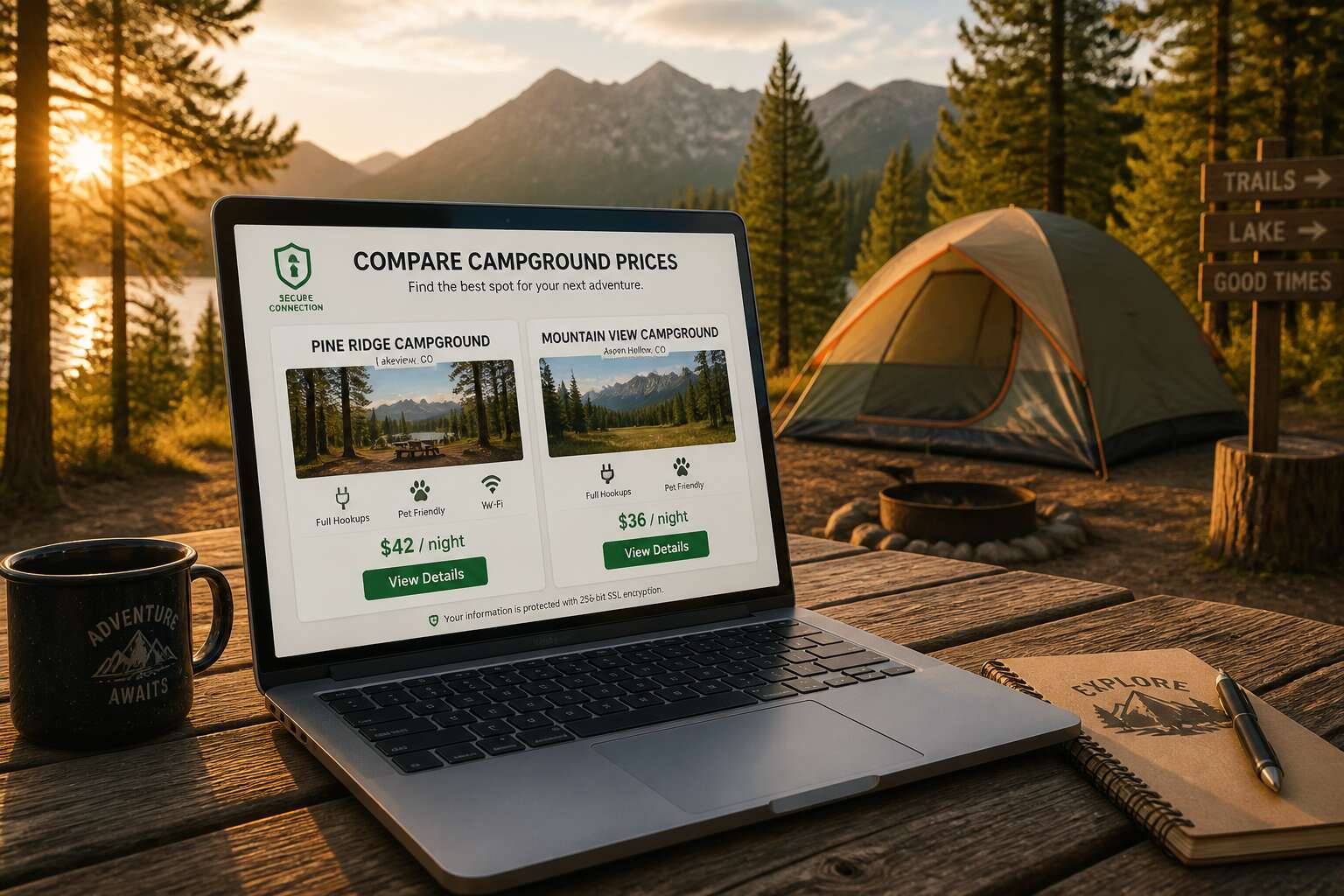
Understanding Campground Booking Platforms
Booking platforms are the new travel agents. They aggregate sites and promise the best rates. Behind the glossy interfaces are fees, phantom availability, and hidden terms. In South Africa, their popularity has exploded. That growth invites smart campers and opportunistic scammers.
Understanding how these platforms work helps you avoid the traps. Most sites act as middlemen, taking a commission and passing the cost to you. Some display prices without levies. Others add a service fee at checkout. Always check the final total before committing.
Learning how to compare prices and book campgrounds online safely begins with knowing what each platform offers. Compare these factors:
- Cancellation policies and refund windows
- User reviews and their verification status
- Secure payment gateways with local fraud protection
That comparison is the core of smart booking. A lower listed price often means stricter terms. A pricier option could include free cancellation. Reading the fine print is unglamorous work. I often read it twice. It is the only reliable method.
How to Effectively Compare Campground Prices
The “affordable” campsite you found at 2am often transforms into a barely legal parking lot by sunrise. In South Africa, a beautiful photo of a bushveld view can conceal a desperate lack of shade, or worse, a startling proximity to the N1. So, how do you know if that R350 price tag is a steal or a scam?
You need a methodology, not optimism. The secret to how to compare prices and book campgrounds online safely lies in verifying the hidden costs. That advertised rate rarely includes the conservation fee, the vehicle surcharge, or the obligatory “environmental levy.”
- Verify the exact site number, not just the camp name.
- Confirm if the price covers two people or one.
- Search for recent photos on Google Maps, not only the website.
Once you spot the true total, you are halfway to booking securely. A low price only counts as a victory if the booking system actually secures your stand.
Verified Reviews and Trustworthy Sources
When planning a getaway, the gap between a stunning campsite photo and the gritty reality on arrival is often wide. Our reliance on user feedback to bridge that gap is immense, yet the digital landscape is littered with both polished shills and overly harsh rants. I tend to look for reviews that mention specific details like site numbers, wind direction, or the exact condition of the ablution blocks. Those concrete observations carry more weight than vague praise.
To navigate this, you have to engage in a bit of digital detective work. Verified purchase badges offer a baseline, but they are not a silver bullet. Look for patterns across multiple platforms. A single glowing review among a sea of mediocrity is often a red flag. Conversely, a single bad review amongst a hundred positive ones might just be a grumpy camper having a bad day. Read the management’s responses to complaints; a professional and proactive reply often signals a site that cares.
Here are a few signals I check for when scouting a location:
– Photos uploaded by recent guests, not just the official gallery shots.
– Reviews that mention the actual check-in process and staff friendliness.
– Consistency in the scoring of cleanliness and noise levels.
– Dates on the reviews to ensure they are from the current season.
The goal is to get a weather forecast for the experience, not a historical summary. If you take the time to sift through the aggregate data and the individual voices, you will sharpen your ability to know how to compare prices and book campgrounds safely, ensuring your hard-earned cash secures a genuine escape rather than a picturesque disappointment.
Secure Payment Methods and Fraud Prevention
Nearly 30% of South African travellers have encountered a fake booking site. That statistic always makes me pause. When you learn how to compare prices and book campgrounds online safely, payment security becomes your first step.
Stick to well-established payment gateways. Look for PCI DSS compliant platforms. Your credit card is safer than a direct EFT because you can reverse charges.
- Check for the padlock icon and ‘https’ in the URL
- Use a virtual card for online purchases
- Never send banking details via email
Fraud prevention also means reading the campsite’s refund policy before entering card details. A legitimate site will not demand payment via WhatsApp or a private bank account. Trust that niggle! Slow down and verify the domain spelling. If the price looks low compared to your earlier comparisons, it likely is a trap.
Understanding Cancellation Policies and Hidden Clauses
A stunning campsite photo can be deceptive, especially when the fine print hits your wallet later. The true cost of your escape often lies in the cancellation policy, a detail many travellers gloss over in their excitement. An initially affordable site can become an expensive loss if your plans change, turning a dream trip into a financial headache. Understanding these terms is a critical part of how to compare prices and book campgrounds online safely, protecting your budget from unexpected surprises.
Policies vary wildly across the industry. You might find a “non-refundable” rate that is significantly cheaper, but it locks you in completely. Conversely, a flexible rate offers peace of mind but at a premium. Ask yourself what happens if a cold front rolls in or the kids get sick. That fifty-percent penalty might be a risk you are unwilling to take, or it might be a calculated gamble that suits your spontaneous style.
Then there are the hidden clauses that lurk beyond the basic refund percentages. These are the small print items that can catch you off guard. Watch out for these common charges:
– Cleaning fees that are added separately and are never refundable.
– Pet deposits that might require a deep-cleaning surcharge.
– Fees for using certain facilities, like pools or laundry, which are not included in the base price.
– Age restrictions on equipment or quiet hours that could impact your stay.
– A minimum stay requirement that forces a last-minute extension.
Navigating these minor traps is essential. Always scan the reservation page for a link to the full terms and conditions before you hand over your card details. A quick phone call to the office can also clarify confusing points, a step that can save you a significant amount of money later. This diligence ensures you are not just getting a pitch, but a complete picture of your financial commitment. A thorough review of these clauses is just as vital as the initial price comparison, ensuring your chosen spot remains a source of joy and not a financial misstep.
Final Checks Before Confirming Your Reservation
A significant storm front can move across the Drakensberg in minutes, and it should not be the only surprise you encounter. The final step before spending a cent is a meticulous review of the fine printcars. This is where vague location descriptions and “administrative fees” come to lightcars. You must verify the exact GPS coordinates and understand the cancellation policy’s mercy, or lack thereofcars. Forking over a deposit seals the agreement, so aligning your expectations with the hard rules of the campsite owner is paramount to avoiding a costly disputecars.
I always find myself scrutinizing the details like a detective. It is the difference between a serene getaway and a logistical nightmare. Remember that South African campsites often operate on Eskom’s load-shedding schedule, so confirm whether they provide backup power or solar geysers. The tariff structure can also be labyrinthine, with separate charges for vehicles, trailers, and each occupantcars. Before you click that confirm button, check the following with absolute clarity:
– The total cost includes all levies, tourism taxes, and service fees.
– The unit’s sleeping capacity matches your group size exactly.
– Check-in and check-out times allow for your travel plans on those notoriously winding passes.
– You have a backup communication channel if the park’s signal fails.
A quick phone call to the reserve can resolve ambiguities that a chat bot cannot. This final verification is your shield against hidden costs and mismanaged expectations. Ultimately, this process teaches you how to compare prices and book campgrounds online safely, ensuring the only wild thing you contend with is the wildlife. You are not just renting a patch of grass; you are procuring a memory, and the paperwork should feel just as secure.

0 Comments