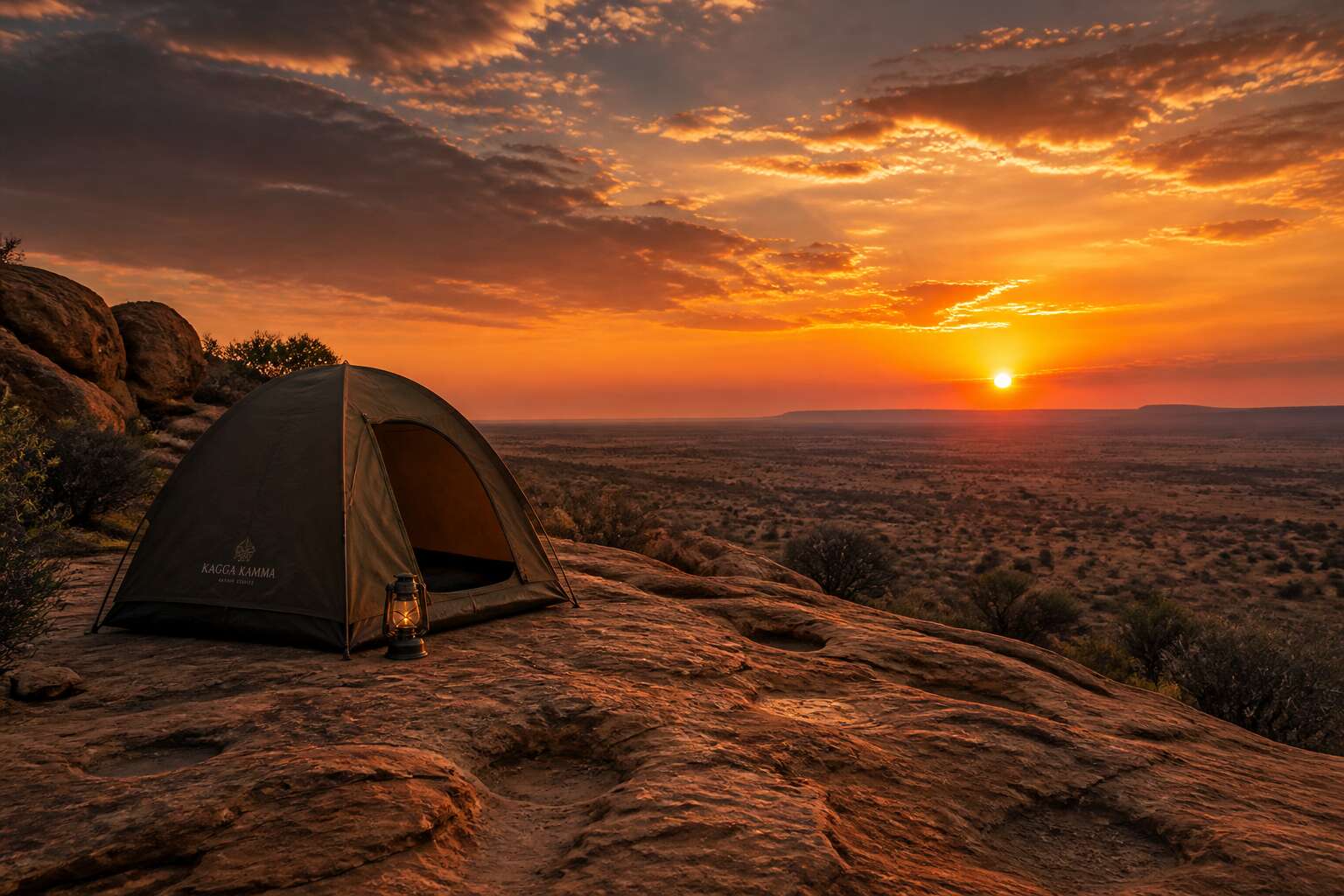
Understanding the Reserve’s Landscape and Location
Geographical Setting and How to Get There
Some places ask for a pilgrimage; Kagga Kamma demands a sturdy 4×4 and a sense of humor. The reserve sits in the Cederberg’s sandstone wilderness, roughly 250 kilometers from Cape Town. This is not a drive-through destination. The gravel roads will challenge your driving skills and your vehicle’s clearance.
To reach Campgrounds Kagga Kamma Nature Reserve, head north on the N7, turn off at Ceres, and follow the dirt path for the last 50 kilometers. You will pass rock formations that seem oddly shaped and out of place.
- Check your fuel gauge before leaving Ceres.
- Drive slowly on the final stretch; the ruts are deep.
- Arrive before sunset, as the gates close at dusk.
The landscape rewards the patient. Orange cliffs, hidden kloofs, and deep quiet.
Climate and Seasonal Camping Considerations
Some of these sandstone cliffs predate the dinosaurs by roughly 100 million years. That geological age shows in the striated rock faces and the narrow kloofs carved by millennia of runoff. The terrain is rugged, demanding respect, not admiration.
Climate here is erratic and honest. Summers are dry and hot, with nights that plummet rapidly. Winters bring rain, sometimes snow, and the red rock turns slick with moisture. For camping, that means preparation is non-negotiable! I always check the extended forecast before booking a pitch at Campgrounds Kagga Kamma Nature Reserve.
- Summer (December to February): Days reach 35°C, but nights drop below 10°C. Pack a four-season sleeping bag.
- Winter (June to August): Clear days follow cold fronts, but temperatures hover near freezing at night.
- Spring and Autumn: The sweet spot, with moderate days and crisp evenings.
Ignore the seasonal patterns and you will face discomfort. The Campgrounds Kagga Kamma Nature Reserve offers exposure, not shelter from the elements. The terrain itself is unforgiving, so a solid groundsheet and windproof pegs are essential. The reward is a landscape that holds its silence under a vast, open sky.
Unique Rock Formations and Scenery
The sandstone cliffs at Campgrounds Kagga Kamma Nature Reserve are old, with striations that record millennia of wind and water. Narrow kloofs carve through the terrain, creating routes that require careful footing. I often stop to listen; the silence between these rock walls is complete. The formations take on distinct shapes, and regular visitors learn to use them as landmarks.
- The Finger, a thin pillar isolated from the main cliff.
- The Alcove, a natural recess that holds shade until the late afternoon.
- The Split Rock, a boulder separated by frost into two clean halves.
The Campgrounds Kagga Kamma Nature Reserve does not dramatize its scenery. The beauty sits in the patient details of weathered stone and open sky, and that quiet permanence is a strong reason to pitch a tent nearby.
Wildlife Encounters to Expect
The map for Campgrounds Kagga Kamma Nature Reserve is a suggestion, not a promise. After a few hours, you learn to read the land by its scattered acacia trees and the direction of the baboon calls. The landscape rewards attention to subtle shifts, a hidden seep, a sudden drop in grade. Wildlife sightings follow their own rhythms. I have learned to expect:
- Klipspringers balancing on improbable cliff ledges, their hooves precisely placed.
- Rock hyraxes sunning themselves like tiny, judgmental boulders.
- Cape foxes slinking past at dusk, if you keep still enough.
The reserve holds its animals loosely. Baboons roam with entitlement, while the smaller creatures treat every tent zip as a potential alarm. Knowing your location at Campgrounds Kagga Kamma Nature Reserve means understanding who owns the morning. The granite outcrops and shallow valleys guide you, but the wildlife supplies the commentary. What a commentary it is!
Types of Camping Experiences Available
Designated Campsites vs. Remote Wilderness Spots
A single night under the Karoo stars reshapes your sense of scale. At Campgrounds Kagga Kamma Nature Reserve, the choice between designated campsites and remote wilderness spots defines your entire experience. The formal grounds offer level stands, communal ablutions, and a sense of safety. I found them ideal for families and first-time campers.
Remote spots demand more! You must carry water, manage waste, and rely on your own skills. The reward is absolute silence, broken only by wind on sandstone. The reserve permits a limited number of these sites daily, preserving their wild character.
- Designated sites: access to firewood and shade
- Remote spots: no facilities, total isolation
Choose based on your appetite for challenge. Both reveal the reserve’s beauty, yet they offer entirely different perspectives on the landscape.
Self-Catering Camping and Braai Facilities
At Campgrounds Kagga Kamma Nature Reserve, self-catering camping puts the Karoo pantry at your feet. Each designated stand includes a braai grid and ash pit, so you can cook lamb chops while the sun drops behind the sandstone. Firewood arrives daily at reception, and potable water points sit within easy reach of most stands.
For campers who want a touch more structure, the reserve provides:
- Communal kitchen shelters with prep tables and wash basins
- Gas braai stations for windy evenings
- Ice and basic provisions at the camp shop
Bring your own potjie pot, and the campfire becomes your kitchen. This arrangement suits travellers who want self-reliance with comfort. Staff clean the braai facilities each morning, so the grounds stay tidy throughout your stay.
Family-Friendly Camping Zones
The family-friendly camping zones at Campgrounds Kagga Kamma Nature Reserve sit on level ground, far from the cliff edges. Parents can let kids roam the open spaces while the sun warms the sandstone. The layout feels intentional, with distances that feel short for little legs.
These zones prioritize safety without sacrificing solitude. We found these conveniences make the stay effortless:
- Level pitches that fit tents and rooftop tents comfortably
- Direct access to flush toilets and warm showers
- Shaded spots under the wild olive trees
Evenings bring a sound of insects, which reassures rather than unsettles. The quiet here is profound. For families, this reserve delivers an effortless Karoo escape.
Adventure Camping: Hiking Trails and Sleepouts
The hiking trails from Campgrounds Kagga Kamma Nature Reserve do not meander. They climb, narrow, and open onto views that stop you mid-stride. One route passes weathered sandstone to a plateau overlooking the Cederberg. The sleepouts sit apart from the main camping zones, small stone shelters on high ground where the wind moves without pause.
A typical adventure circuit includes:
- A guided walk to the San rock art sites
- A sunset hike to a cliff viewpoint
- An overnight sleepout beneath the open sky
The huts offer basic mattresses and a fire ring. You carry your own water and supplies. We found the darkness at night to be complete, broken only by settling embers and a distant jackal’s call. Morning light fills the valleys, and Campgrounds Kagga Kamma Nature Reserve feels most alive at this hour.
Essential Facilities and Amenities
Ablution Blocks and Showers
There is a quiet ceremony to washing off the day’s kalahari dust at Campgrounds Kagga Kamma Nature Reserve. The ablution blocks sit unobtrusively among the rock, their concrete walls holding back the wind while the water runs hot and strong. A simple pleasure, but one that becomes profound after a night under the stars.
The showers demand nothing of you. No tokens, no timers, just a steady cascade that smells faintly of the earth. What a relief! The blocks are kept immaculately, swept each morning, with hooks and shelves thoughtfully placed for your belongings.
Inside you will find:
– Private shower cubicles with hot water
– Clean flush toilets
– Basins with mirrors and ample counter space
The light is dim and yellow, but that feels right. It softens the raw beauty outside for a moment, giving you a brief reprieve before you step back into the vastness of Campgrounds Kagga Kamma Nature Reserve.
Power Points and Lighting
Most of us pack more electronics than we admit. At Campgrounds Kagga Kamma Nature Reserve, the power situation stays refreshingly simple. Designated campsites offer a few shared power points, usually clustered near the ablution blocks. The remote wilderness spots have none at all, and honestly, that is a relief.
Lighting follows the same philosophy. A handful of solar lamps mark the main paths once the sun drops, but darkness arrives early and stays heavy. Bring your own lanterns and headlamps. I prefer my own light anyway.
A few practical notes:
- Power points are limited to specific zones
- Solar lighting covers only the main walkways
- Charge devices at central facilities during the day
The night sky handles the rest of the illumination. When the stars appear over Campgrounds Kagga Kamma Nature Reserve, you understand why extra lighting was never part of the plan. Silence and darkness are the amenities here, and they are plentiful.
Water Supply and Potable Water
At Campgrounds Kagga Kamma Nature Reserve, water is drawn from boreholes and stored in tanks near the central facilities. The supply is potable, though it carries the mineral taste of the Karoo landscape. Most campers find it perfectly drinkable, but a filtration bottle adds comfort. Tank levels fluctuate with seasonal rainfall, so the reserve asks guests to use water conservatively. The remote wilderness spots have no piped water at all.
For those staying in the designated campsites, the water points are placed within easy walking distance of the ablution blocks. You will fill your own containers, as there are no taps on individual stands. Some practical points to remember:
- Drinking water at Campgrounds Kagga Kamma Nature Reserve comes from boreholes and is safe to consume
- Water pressure drops during peak afternoon hours
- Boiling is recommended for anyone with a sensitive stomach
Fire Pits, Wood, and Braai Areas
At Campgrounds Kagga Kamma Nature Reserve, the braai fire is the evening anchor. Each designated campsite comes with a fixed fire pit and a steel grid, so you only need to bring your own tongs and skottel if you prefer. The reserve sells neatly bundled wood at reception, which saves you from foraging in the fragile veld.
Collecting dead wood from the ground is not allowed, as it strips the ecosystem of vital nutrients. Instead, buy a bag or two on arrival. The wood is dry, local karoo acacia, and it burns with a clean, intense heat.
- Fire pits are checked and cleaned each morning
- Bring firelighters and a long lighter; matches fail in the wind
- No open flames outside the designated braai areas
Remote wilderness spots lack fire pits entirely, so a portable gas stove is your only option there. The main campsites, by contrast, give you a full open-air braai experience beneath a star-packed sky.
Waste Disposal and Recycling
A single polystyrene takeaway box left on a rock in the Cederberg will outlast every tent peg on the property. At Campgrounds Kagga Kamma Nature Reserve, waste disposal is a personal contract with the landscape. There are no municipal trucks; the nearest dump site sits two hours down the pass.
I have watched staff haul sealed bags of recycling down that gravel road every Thursday. The reserve provides colour-coded bins beside the reception complex, with separate compartments for glass, tin, plastic, and paper. Organic scraps go into a covered compost drum that feeds the nursery.
- Rinse containers before disposal to deter baboons
- Keep waste sealed inside your vehicle overnight
- Take nappies and sanitary products home
Everyone honours the system, and the veld stays clean because of it.
Booking, Fees, and Permit Information
How to Reserve Campsites Online
Securing a spot at Campgrounds Kagga Kamma Nature Reserve takes foresight, since peak season slots vanish within hours of opening. Reservations move through an online portal that releases availability three months ahead each morning at 08:00. You must register an account and verify your email before the system lets you proceed.
Fees are structured per site per night, with a separate conservation levy added at checkout. Half the total is due immediately as a non-refundable deposit, and the remainder follows fourteen days prior to arrival. Permit rules remain straightforward: your confirmation email serves as the gate permit, so print it or keep it accessible offline. A small handling charge applies to every online transaction, which the system displays only at the final step. For groups larger than eight people, the portal blocks direct booking, requiring you to email the reserve office instead.
Daily Conservation and Camping Fees
Fees at Campgrounds Kagga Kamma Nature Reserve have a way of sneaking up on you. The daily conservation levy is charged per person, not per site, and it appears as a separate line at checkout. That levy puts money toward rhino monitoring and firebreak maintenance. The camping fee covers your site, the ablution blocks, and the braai grid. Permit information stays refreshingly low-tech. Your confirmation email is the gate permit, so screenshot it before you lose signal. What does that actually cost you?
- Site rental per night
- Conservation levy per person
- Online handling charge
Half the total is due at booking as a non-refundable deposit. The balance clears fourteen days before arrival. Groups larger than eight need to email the reserve office directly. The numbers feel steep until you see the starlit sky.
Check-In and Check-Out Procedures
The gate at Campgrounds Kagga Kamma Nature Reserve locks at sunset, and the guard does not negotiate. Check-in opens at 14:00; the gate guard waves you through once you show your confirmation email. That screenshot is your permit. Check-out runs until 10:00, giving you the morning to pack down without haste.
Late arrivals must phone ahead. The outer gate stays shut after dark, and security will not open it. Early departures require a quick stop at reception so the manager can mark you off.
Booking for Campgrounds Kagga Kamma Nature Reserve flows through the online portal. A 50% deposit secures the site; the balance clears automatically 14 days before arrival. Groups over eight email the office directly.
The manager inspects sites after checkout. Damaged braai grids hit your deposit.
The rhythm is simple:
- Check-in from 14:00.
- Gate locks at sunset.
- Check-out by 10:00.
- Report to reception before driving off.
Group Bookings and Exclusive Campsites
For those who require solitude, the exclusive campsites within Campgrounds Kagga Kamma Nature Reserve operate under a different contract. Groups larger than eight must correspond directly with the office, bypassing the online portal. This secures a private fold of the reserve, away from the shared grounds. The permit for such a site carries the same sunset lock, but the quiet is heavier.
Fees for these enclaves reflect their seclusion. A full payment replaces the two tier deposit structure, and the balance cannot be split. The manager asks for a list of vehicles before arrival, as the gate guard receives no other instruction.
- Group permits are non transferable.
- Exclusive sites hold a maximum of twenty guests.
- Quiet hours begin at 22:00, enforced by patrol.
Booking a group slot requires a signed indemnity form. The office emails it within a day. Without that signature, the reservation dissolves.
What to Pack and Prepare for Your Stay
Essential Gear for Rock Camping
A single night among the weathered boulders at Campgrounds Kagga Kamma Nature Reserve can bring a 15 degree Celsius temperature swing. That dramatic shift transforms packing from a casual chore into a deliberate strategy. The rocky terrain demands stout footwear with aggressive tread, not sneakers. I always carry a high-lumen headlamp for the absolute darkness once the sun vanishes behind the Cederberg ridges. Never forget a windproof shell!
Essential gear for this landscape rarely follows convention. A compact first-aid kit with blister plasters, a multi-tool for pitching tent pegs into hard ground, and a dust-resistant buff belong in your daypack. Because the reserve sits far from any commercial outlet, a robust water bladder and a portable solar charger prove essential. I also include these practical items:
– A whistle for emergency signals.
– A small roll of duct tape for tent repairs.
– A thermal base layer, even in summer.
The absence of signal makes a printed map a wise companion. Preparing for Campgrounds Kagga Kamma Nature Reserve means anticipating the quirks of the rock, the cold, and the quiet.
Clothing and Footwear for the Terrain
Weak footwear fails on this terrain. Leather boots with ankle support and deep lugs grip the Cederberg sandstone; sneakers slide across the weathered boulders. Dress for a 15 degree Celsius swing. The night arrives cold, so pack a thermal base layer and a fleece mid-layer. For daytime, a long-sleeved shirt blocks the punishing sun.
- A windproof shell to tame the kloof drafts.
- Wool socks, two pairs, for blister prevention.
- A wide-brimmed hat.
Skip denim. Quick-drying trousers handle the evening dew. Gaiters keep grit out of your boots on the boulder fields. Respect the terrain and the Campgrounds Kagga Kamma Nature Reserve will reward you.
Food Storage and Cooking Equipment
Proper food storage transforms a stay at Campgrounds Kagga Kamma Nature Reserve from a battle with thieving baboons into a peaceful retreat. The troop knows every cooler box trick. Secure everything in a lockable metal chest or your vehicle overnight. A dry bag keeps perishables sealed against dust and curious paws.
For cooking, rely on a two-burner gas stove and a cast iron pot. Open fires are allowed in designated braai areas, but wind can flare up. Bring your own grid and a kettle. Avoid glass containers. They shatter on the rocky ground.
- Rat-proof storage crates
- Biodegradable dish soap
- Lightweight folding table
Plan meals with no leftovers. The reserve offers no shop, so pack everything from coffee to cooking oil.
Emergency Supplies and First Aid
A proper first aid kit at Campgrounds Kagga Kamma Nature Reserve needs more than sticking plasters. Rock scrambles and thorn bushes leave their marks. Pack antiseptic wipes, sterile gauze, and a crepe bandage. Add oral rehydration salts for the dry heat. The nearest clinic is a long dirt road away.
Emergency supplies should cover the unexpected. A headlamp with spare batteries works better than a phone torch. Carry a windproof lighter and a thermal blanket. Cell reception is unreliable, so keep a physical map and a fully charged power bank. Tell someone your planned route before you set out.
- Trauma shears and tweezers
- Anti venom kit for snake bites
- Water purification tablets
These items weigh little and make a real difference when help is hours away.
Solar Power and Battery Options
The Cederberg sun beats down with reliable intensity, making it a genuine asset. At the Campgrounds Kagga Kamma Nature Reserve, a folding solar panel can keep your devices alive for days. Aim for a 20 watt model and position it north during midday hours. A power bank with 10,000mAh or more stores excess energy for cloudy spells.
Rechargeable AA batteries suit headlamps and radios far better than disposables. Bring a solar charger for these cells. Campsite power points are rare, so this kit becomes your main source. Remote spots offer none at all.
- Folding solar panel with USB output
- High capacity power bank
- Rechargeable AA batteries with a dedicated solar charger
Responsible Camping and Conservation Tips
Leave No Trace Principles
Every year, thousands of visitors pass through Campgrounds Kagga Kamma Nature Reserve, yet the sandstone still wears its ancient patina. That is not luck. It is the quiet result of people obeying Leave No Trace principles without turning them into a sermon.
Pack out everything you carried in. That includes apple cores, cigarette butts, and the torn corner of a braai grid. In this dry environment, organic scraps do not vanish; they mummify and linger for decades.
- Inspect your campsite before departure, sweep for stray bottle tops.
- Keep boots and bags inside your tent at night, so curious wildlife stays wild.
- Report any damaged vegetation to the office rather than pretending it healed.
These small habits preserve the stark beauty that brought you here, so the next traveler feels like the first.
Respecting Wildlife and Habitat Protection
At Campgrounds Kagga Kamma Nature Reserve, wildlife moves through the same paths you walk. Baboons test tent zips, klipspringers watch from rocky ledges, and raptors circle thermals above your camp. These animals are not attractions to approach. Keep a respectful distance and let them continue their routines undisturbed. When you step off marked trails, you crush seedlings that take decades to establish in this sandstone terrain. Stick to existing paths, even when a shorter route tempts you.
Store food in sealed containers inside your vehicle. A hungry troop of baboons learns bad habits quickly, and once they associate humans with easy meals, the reserve must intervene. That intervention rarely ends well for the animal. Your vigilance protects both the wildlife and the next camper’s experience.
Fire Safety and Environmental Impact
At Campgrounds Kagga Kamma Nature Reserve, fire safety is a conservation act, not a rule. The dry fynbos and rocky outcrops turn a stray spark into a disaster. I always clear the area around the pit and never leave a flame unattended.
Your fire’s impact lingers after you leave. Charred soil and blackened stones persist for generations.
- Check the day’s fire danger rating.
- Use only allocated braai areas.
- Soak and stir ashes before departure.
That is how we keep this landscape alive.
Noise Levels and Etiquette
The soundscape at Campgrounds Kagga Kamma Nature Reserve is fragile. Conversations carry across the rocky amphitheatres, and a single voice can reach a tent hundreds of metres away. The sandstone cliffs do not absorb noise; they redirect it.
I have learned to treat volume as a resource. After sunset, I speak softly and keep torch beams low. Passing another campsite warrants a brief greeting, not a conversation.
Etiquette matters in these shared spaces:
- Use headphones for music or podcasts.
- Switch off generators before dusk.
- Keep early morning chatter minimal.
- Respect the quiet of neighbouring campers.
The silence at Kagga Kamma is part of the appeal. Guarding it makes the wilderness more generous for everyone.
Supporting Local Conservation Efforts
Campgrounds Kagga Kamma Nature Reserve welcome campers who see conservation as an active partnership. I have learned that the small fees paid at the gate do more than grant access. They fund alien vegetation clearing and water point maintenance.
Supporting local conservation efforts often requires asking the right questions. The reserve staff know which projects need extra hands or materials. I once spent an afternoon sorting recycled glass at the maintenance yard. That request came from a simple conversation.
Practical ways to contribute:
- Purchase firewood from surrounding farms.
- Use the refillable water stations instead of single-use bottles.
- Report any damaged fencing or erosion to the office.
- Leave a small donation at the reception for the conservation fund.
These gestures keep the reserve resilient for generations.

0 Comments